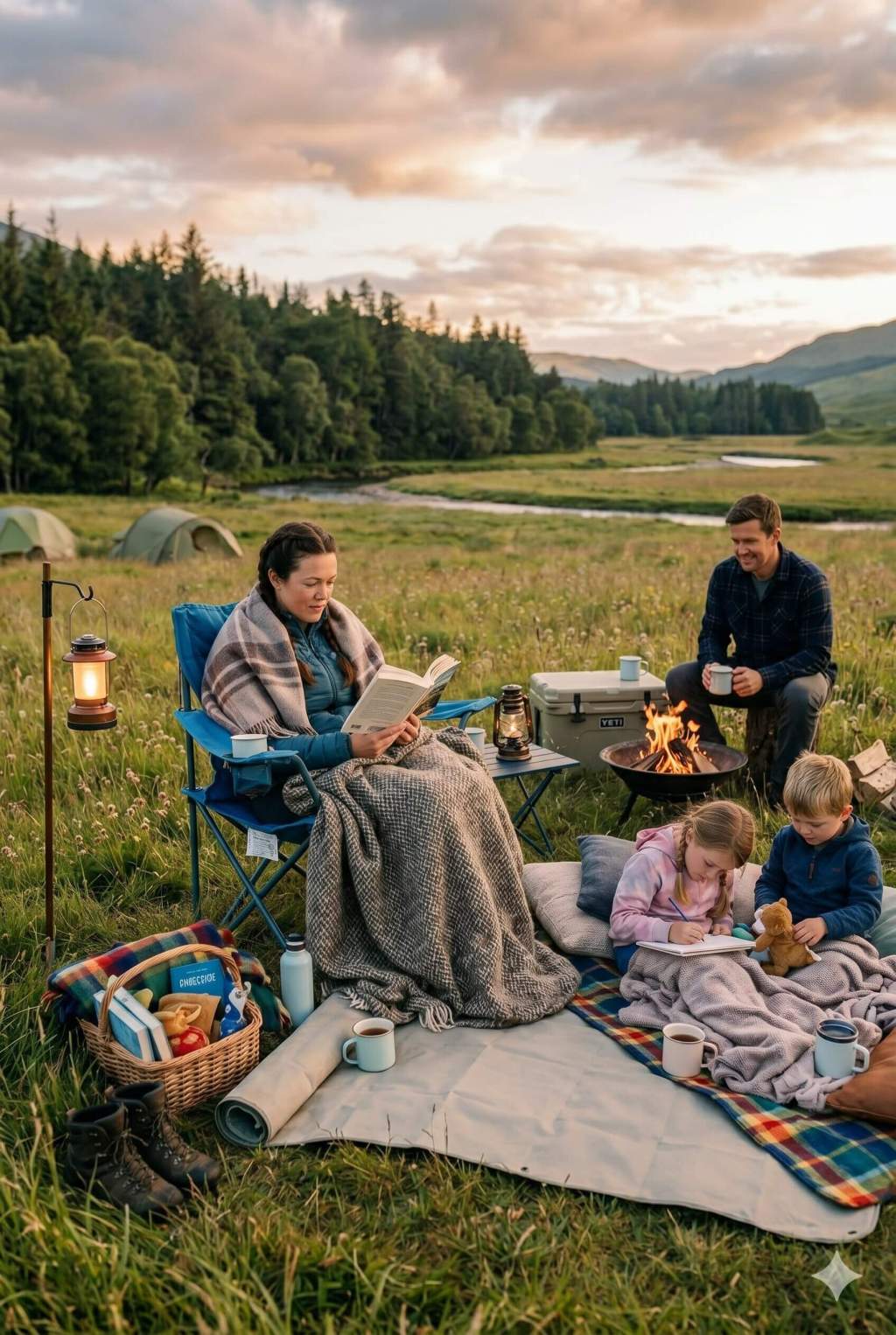
Learn what day camping is, what to pack, and how to enjoy a slow, simple day outdoors. A beginner-friendly guide to day camping in nature.
What is day camping?
Day camping is the practice of spending a full day outdoors in nature without staying overnight. It’s a simple way to enjoy camping-style relaxation without tents, sleeping bags, or complex gear.
Instead of packing for a night away, you arrive at a chosen outdoor spot, such as a forest, beach, park, or countryside field and spend the day there, returning home in the evening.
It combines the calm of camping with the simplicity of a day trip.
Day camping vs picnic: what’s the difference?
While a picnic is usually a short outdoor meal, day camping is a slower, more immersive experience.
Picnic:
- Usually a few hours
- Focused on eating outdoors
- Often a quick stop during the day
Day camping:
- Lasts most of the day
- Focuses on relaxing in nature
- Encourages slow, unhurried time outdoors
- Often includes reading, resting, or simply enjoying the surroundings
Day camping is about staying longer and slowing down, not just eating outside.
Why day camping is becoming so popular
Search interest in terms like “easy outdoor activities”, “simple camping ideas”, and “day trips in nature” has grown as more people look for low-effort ways to spend time outside.
Day camping is popular because it is:
- Beginner-friendly (no camping experience needed)
- Low cost
- Flexible and spontaneous
- Perfect for families, couples, and friends
- A simple way to enjoy nature without planning a full camping trip
It makes outdoor living feel more accessible.
What to bring for a day camping trip
You don’t need much gear for day camping. The goal is comfort, not complexity.
Essential day camping checklist:
- A comfortable blanket or ground layer
- Food and drinks
- Layers of clothing for changing weather
- Waterproof jacket (just in case)
- Something warm for later in the day
- A bag to carry everything
Optional extras:
- Cushions or seating pads
- Thermos with hot drinks
- Book or journal
- Portable speaker (kept low for others around you)
A camping blanket is often the most important item; it creates a base for sitting, relaxing, and staying warm as the temperature drops.
Best places for day camping
You don’t need remote wilderness to enjoy day camping. Some of the best spots include:
- Woodland clearings and forest walks
- Countryside fields and hills
- Lakesides and riversides
- Coastal viewpoints
- Local parks with quiet areas
The key is choosing a place where you can settle comfortably and stay for a while.
How to enjoy a perfect day camping experience
The best day camping trips aren’t rushed. They follow a simple rhythm:
- Arrive without a strict plan
- Find a comfortable spot
- Settle in and stay a while
- Eat slowly and take breaks
- Watch the light change through the day
- Leave only when it naturally feels right
It’s less about doing, and more about being.
Why day camping is good for wellbeing
Spending extended time outdoors has been linked to improved mood, reduced stress, and better focus. Day camping encourages you to slow down and disconnect from constant stimulation.
It creates space for:
- Calm and rest
- Shared time with others
- A break from screens and schedules
- A deeper connection to nature
Even a single slow day outside can feel restorative.
Simple time outdoors matters
Day camping doesn’t require special skills or expensive gear. It simply invites you to spend more time outside, in a slower and more intentional way.
A blanket, a quiet place, and a few hours of unhurried time can be enough.
Sometimes, that’s all you need.
Find out more (UK Day Camping Places, Planning and Independent Guides)
If you are planning a relaxed UK day camping trip whether that is a riverside picnic a beach day or using a campsite as a base it helps to know where you can actually go and what is allowed The links below cover campsite booking countryside access planning tools and BBQ friendly outdoor spots across the UK
UK Day Camping & BBQ-Friendly Outdoor Spots
To get the most out of your day camping, think about booking a campsite for a night and using it as a full-day outdoor base. Or use public countryside, rivers, and beaches for informal “day camping” style trips. See the top links to help you:
Campsites (overnight stay used as a “day camping base”)
- Pitchup (UK campsite booking + types of stays).
- Cool Camping (curated peaceful UK campsite stays).
- Campsites.co.uk (UK campsite directory and booking).
Public Outdoor Spaces (true “day camping” style: fields, rivers, beaches)
- Forestry England (forests, picnic sites, BBQ areas where permitted).
- Woodland Trust (free UK woodland picnic spaces).
- Canal and River Trust (riverside paths and picnic spots).
- Visit Britain (UK outdoor inspiration: beaches, countryside, coast).
- Visit England (regional outdoor day trip ideas).
- National Trails (riverside and countryside walking routes like Thames Path).
Find fields, rivers, beaches, picnic spots)
- Ordnance Survey (official maps for UK countryside access).
- AllTrails UK (easy walks, lakes, rivers, picnic-friendly routes).
- Komoot (plan relaxed outdoor day trips and scenic stops).
- GOV.UK Countryside Access (rights of way and public land rules).
BBQ-Friendly Legal Outdoor Spots (UK)
✔ Important: BBQ rules vary by landowner, council, season, and wildfire risk. Always check signage before lighting anything.
- Forestry England (designated BBQ areas in selected forests).
- Loch Lomond and The Trossachs National Park (restricted BBQ zones + strict fire rules).
- Canal & River Trust (some riverside picnic areas; rules vary by site).
- National Trust (BBQs only in designated areas at selected sites).
- Scottish Outdoor Access Code (responsible BBQ use in Scotland).
- GOV.UK Countryside Access (public land, fire safety, access rules).
- Met Office Fire Severity Index (check wildfire risk before BBQ use).
Where BBQ-style “day camping” actually works in practice
- Forestry picnic forests (some have BBQ stands or permitted zones).
- Lakeside car parks & managed recreation areas (varies by council)
- Selected beaches (many restrict open fires,always check local rules).
- Designated park BBQ zones in some cities (e.g. controlled grill areas).
 Camping Blankets UK | Collette Costello | Made in Manchester
Leave a comment