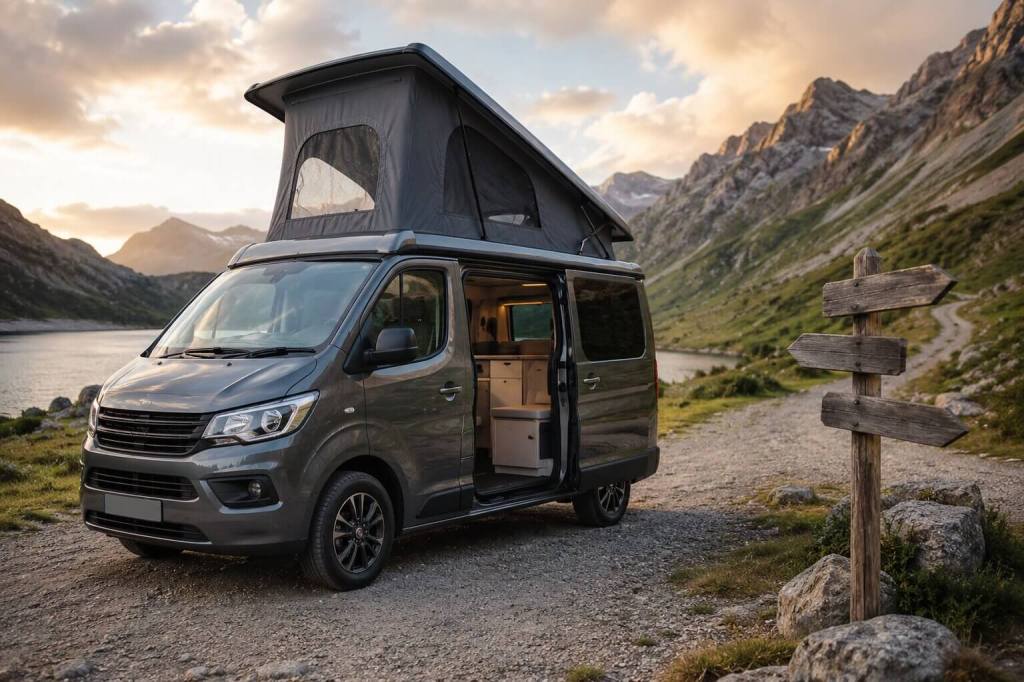
There’s something irresistibly inviting about a campervan that can transform at a moment’s notice. Pop-top campervans, those clever vans with a roof that lifts to create extra headroom and sleeping space, strike a balance between everyday drivability and weekend adventure. But like any travel setup, they come with trade-offs. Here’s a clear look at the pros and cons to help you decide if a pop-top is right for you.
What Is a Pop-Top Campervan?
A pop-top campervan has a roof section that lifts (usually via gas struts or a manual mechanism) to create standing room inside and often an additional bed in the raised section. When closed, the van maintains a lower profile similar to a standard vehicle.
The Pros
1. Compact and Easy to Drive
With the roof down, pop-tops are typically no taller than a large SUV or van. That means easier parking, access to height-restricted areas, and less stress navigating cities or tight roads.
2. Better Fuel Efficiency
Lower overall height improves aerodynamics compared to high-roof vans, which can translate to better fuel economy—especially on long highway drives.
3. Dual-Purpose Practicality
Many owners use pop-tops as daily drivers. You get a functional vehicle during the week and a capable camper on weekends—no need for a second car.
4. Flexible Sleeping Space
The raised roof often includes a second bed, freeing up the lower area for seating or storage. Great for couples, small families, or friends sharing a trip.
5. Open, Airy Feel
With mesh windows and elevated sleeping, the pop-top creates a breezy, tent-like atmosphere—perfect for stargazing or waking up to fresh air.
6. Stealth Camping Advantage
A lower profile makes it easier to blend in when overnighting in urban or semi-urban areas.
The Cons
1. Less Insulation
Canvas or fabric sides don’t retain heat like solid walls. In cold or windy weather, the upper section can feel chilly, and in extreme heat, it can warm up quickly.
2. Weather Limitations
Heavy rain, strong winds, or snow can make popping the roof less appealing. You may end up staying “closed” more often in poor conditions.
3. Setup Required
Unlike fixed high-roof vans, you’ll need to pop the top each time you want full standing height or to use the upper bed. It’s usually quick, but it’s still an extra step.
4. Limited Storage
Because space is shared with the pop-top mechanism and bed, storage can be tighter than in larger, fixed-roof conversions.
5. Wear and Maintenance
The lifting mechanism and fabric require care. Over time, canvas can wear, zippers can fail, and seals may need replacing.
6. Security Concerns
Fabric sides aren’t as secure as solid walls. While this is rarely an issue in most campsites, it’s something to consider in unfamiliar areas.
Who Are Pop-Tops Best For?
Pop-top campervans shine for:
- Weekend travellers and road-trippers
- Urban dwellers needing a multi-use vehicle
- Couples or small families
- Adventurers who value flexibility and mobility over full-time living space
They may be less ideal for:
- Full-time vanlifers in extreme climates
- Travellers who prioritise maximum comfort and insulation
- Those needing extensive storage or indoor living space
Pop-top campervans offer a clever middle ground, compact on the outside, surprisingly spacious on the inside. If your adventures lean toward flexibility, spontaneity, and a blend of daily practicality with weekend escape, a pop-top could be your perfect travel companion. If you prioritise all-season comfort and maximum interior space, a fixed high-roof van might suit you better.
In the end, it comes down to how and where you plan to roam. To learn more check out the articles below:
- How to Buy the Pick of the Pop-Tops in the UK: Covers buying costs, ownership considerations, insurance, and the best campervan options for UK buyers.
- Pop-Top vs High Roof, Which Roof Is Right for Your VW Campervan?: One of the best UK-focused comparisons for parking, fuel economy, height restrictions, and daily usability.
- What Are the Pros & Cons of a Pop-Top Roof?: Concise breakdown of insulation, maintenance, driving comfort, and extra sleeping space.
- The Templer Way Guide to Pop-Top Roofs for VW & Ford Campervans: Practical advice on UK van conversions, ventilation, sleeping layouts, and choosing the right pop-top setup.
- Pop Up Tops for Campervans: Transform Your UK Road Trip Experience: A detailed look at safety certifications, insulation, and what to check before buying a pop-top campervan in the UK.
Keep up-to-date with camping tips and advice. Subscribe to the newsletter below:
 Vintage Camping Blankets UK | Collette Costello
Leave a comment