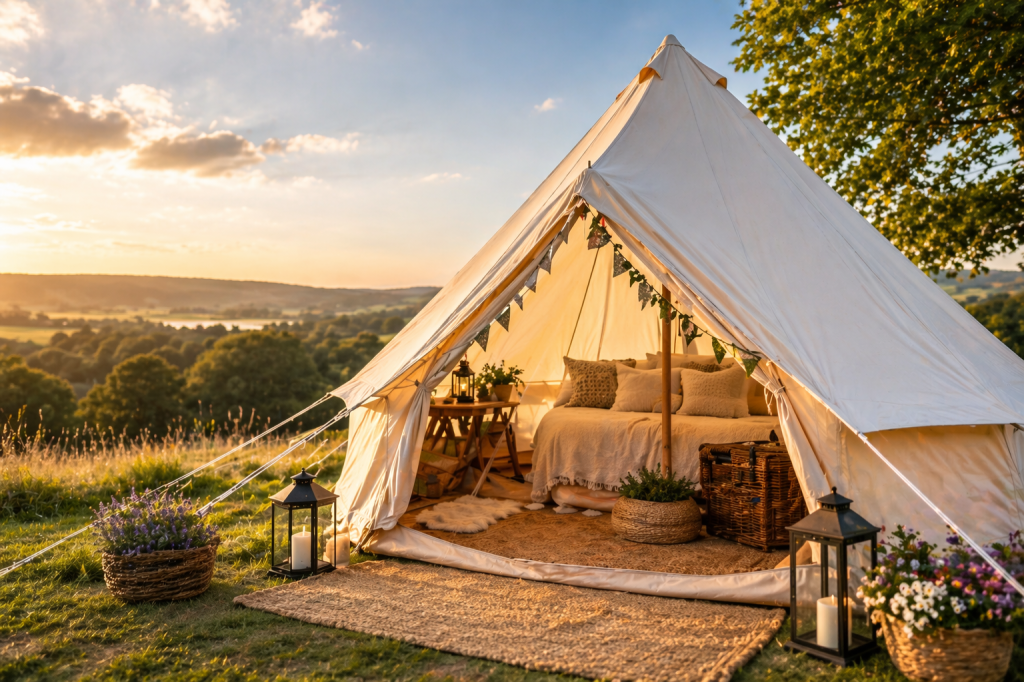
Bell tents have surged in popularity in recent years, especially with the rise of glamping, an outdoor experience that blends nature with comfort. Recognisable by their circular footprint, central pole, and sloping canvas sides, bell tents offer a unique alternative to traditional camping.
This guide brings everything together: what bell tents are, their advantages and disadvantages, where you can try them in the UK, and expert resources to learn more.
What Is a Bell Tent?
A bell tent is a spacious, single-pole tent—traditionally made from breathable cotton canvas—supported by a central mast and tensioned with guy ropes. The design creates a roomy, airy interior, often tall enough to stand in, making it ideal for both casual camping and luxury glamping setups.
Pros of Bell Tents
1. Spacious and Comfortable
Bell tents offer significantly more headroom and floor space than standard tents. You can stand upright, add furniture, and comfortably accommodate multiple people.
2. Ideal for Glamping
Their aesthetic appeal and size make them perfect for “glamorous camping.” Many people furnish them with rugs, beds, and lighting for a cosy, boutique feel.
3. Durable and Breathable Materials
Canvas construction is tough and long-lasting. It also allows airflow, reducing condensation compared to synthetic tents.
4. Good Temperature Regulation
Bell tents stay cooler in summer and warmer in colder weather. Some even support wood-burning stoves, extending their use into winter.
5. Simple Structure
Despite their size, they are relatively straightforward to pitch thanks to a central pole design.
Cons of Bell Tents
1. Heavy and Bulky
Canvas tents are much heavier than modern lightweight tents, making them unsuitable for backpacking.
2. Slow to Dry
If packed away wet, they can develop mould or mildew, so drying is essential.
3. Higher Cost
Bell tents are generally more expensive due to their size and materials.
4. Requires Space
They need a large, flat area for setup, including space for guy lines.
5. Maintenance Required
Canvas needs care—cleaning, drying, and occasional waterproofing.
Where to Stay in a Bell Tent (UK Glamping Sites)
If you’d like to try a bell tent before investing in one, these UK glamping sites offer ready-made experiences:
- Bell Tent Glamping – Woodland and coastal setting with furnished tents.
- Big Skies Cotswold Glamping – Scenic countryside views and peaceful surroundings.
- Cuddfan Glamping – A “wild glamping” experience in the Brecon Beacons.
- Big Sky Hideaway – Highly rated farm-based retreat with tranquil surroundings.
- Hammonds Glamping – Boutique-style glamping close to London.
- Caracol Glamping – Stylish bell tents with thoughtful interior design.
- Plum Tree Glamping – Bell tents plus quirky stays like yurts and railway wagons.
- Camp De Lank Cornwall – A mix of traditional camping and bell tent glamping near Bodmin Moor.
- Bell Tent Village Parks – Multiple UK locations with fully equipped bell tents.
Further Reading: Top Articles on Bell Tent Glamping
For deeper insight, these expert resources explore trends, buying advice, and real-world use:
- Bell Tent UK – Advantages and Disadvantages of a Bell Tent
- The Bell Tent Shop – Glamping Trends
- CamperNation – Ultimate Guide to Bell Tents
- Bell Tent Village Parks – Glamping Experience Guide
- Hipcamp – Bell Tent Glamping UK
- Outdoors Magic – Best Bell Tents Guide
Who Should Consider a Bell Tent?
Bell tents are ideal for:
- Family camping trips
- Festivals and events
- Glamping businesses
- Longer stays in one location
They’re best suited to campers who prioritise comfort, space, and atmosphere over portability.
Final Thoughts
Bell tents strike a balance between traditional camping and modern comfort. While they require more effort in transport and maintenance, they excel in creating a spacious, stylish, and memorable outdoor experience.
Bottom line: If you value comfort, aesthetics, and a more relaxed camping setup, a bell tent—or a stay in one—can be a worthwhile investment.
Keep up-to-date with camping tips and advice. Subscribe to the newsletter below:
 Camping Blankets | Vintage Styles by Collette Costello
Leave a comment