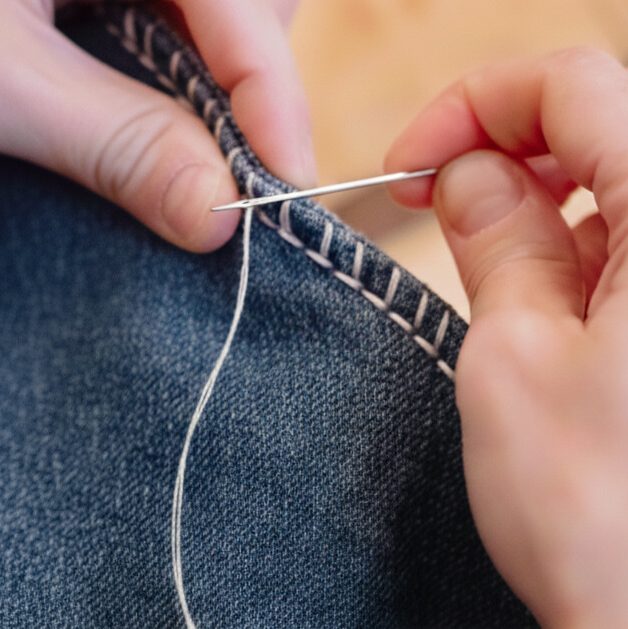
Textile and fabric terms have been woven into the English language for centuries. From “spinning a yarn” to “dyed in the wool,” many everyday expressions originate in the processes of spinning, weaving, sewing and tailoring.
These idioms reflect the historical importance of the textile industry in Britain and beyond, where cloth-making was once central to daily life and trade.
In this article, we explore 40 common textile-related idioms, explaining their meanings and the practical origins behind the phrases.
1. Spinning a Yarn
Means telling a long or exaggerated story. The phrase compares storytelling to spinning fibres into yarn, where details are gradually twisted together.
2. Hanging by a Thread
Describes a situation that is very fragile or close to failure. A single thread can easily snap, symbolising danger or uncertainty.
3. Cut from the Same Cloth
Refers to people who share similar traits or values. It comes from tailoring, where multiple garments are cut from the same fabric.
4. The Fabric of Society
Describes the system of relationships, laws and values that hold a community together. Like woven fabric, society depends on strong, connected threads.
5. In Stitches
Means laughing uncontrollably. The phrase suggests laughter so intense it causes sharp pains in one’s sides, as if stitches were needed.
6. Dyed in the Wool
Describes beliefs that are deeply rooted and unlikely to change. Wool dyed before spinning holds colour permanently, symbolising lasting conviction.
7. Seamless
Refers to something smooth and without obvious problems. In clothing, seams join pieces of fabric, so “seamless” suggests no visible joins or flaws.
8. Patchwork
Describes something made up of many different parts. The term comes from sewing small pieces of fabric together into one design.
9. Tie Up Loose Ends
Means completing unfinished tasks. In sewing, loose threads must be tied or trimmed to prevent unravelling.
10. Weaving a Narrative
Refers to constructing a story carefully. Like weaving threads into cloth, ideas are interlaced into a structured whole.
11. Frayed Nerves
Describes stress or irritation. “Frayed” refers to worn fabric edges, suggesting emotional strain.
12. Tightly Knit
Means closely connected or united. It comes from knitting stitches closely together to create strong fabric.
13. Woven Into
Indicates something deeply integrated. Threads woven into fabric become part of its structure.
14. Spin Doctor
Refers to someone who manipulates information. “Spin” suggests twisting facts, similar to twisting fibres into thread.
15. Hem and Haw
Means hesitating or avoiding a clear answer. A hem is the finished edge of fabric, though the phrase likely imitates uncertain sounds.
16. Ragtag
Describes something disorganised or shabby. It originally referred to people wearing torn or ragged clothing.
17. Tear at the Seams
Means to begin falling apart under pressure. Seams are the stitched joins of fabric, and when they split, the garment fails.
18. Warp and Weft
Refers to the fundamental structure of something. In weaving, warp threads run lengthwise and weft threads cross them.
19. Pull the Wool Over Someone’s Eyes
Means to deceive someone. It likely refers to wigs made of wool that could be pulled down to block vision.
20. On a Shoestring
Means operating with very little money. A shoestring is small and simple, symbolising limited resources.
21. Rags to Riches
Describes rising from poverty to wealth. “Rags” symbolise worn clothing and hardship.
22. Feather in One’s Cap
Means an achievement to be proud of. Historically, feathers were added to hats to mark success.
23. Well-Heeled
Refers to someone wealthy. It originally described sturdy, well-heeled shoes, which suggested prosperity.
24. Tighten One’s Belt
Means to reduce spending. Tightening a belt physically reflects having less to consume.
25. Below the Belt
Describes unfair behaviour. It refers to illegal strikes in boxing, below the protective belt.
26. Roll Up Your Sleeves
Means preparing to work hard. Rolling up sleeves keeps clothing clean whilst doing physical labour.
27. Wear Many Hats
Refers to having multiple roles or responsibilities. Different hats symbolise different functions or jobs.
28. Cloak and Dagger
Describes secrecy or espionage. A cloak, as a garment, suggests concealment.
29. Velvet Glove
Means showing gentleness whilst hiding firmness. Velvet is soft, symbolising a mild outward approach.
30. Iron Out
Means resolving difficulties. It comes from ironing clothes to remove creases.
31. Hang Up One’s Hat
Means settling down or retiring. It refers to placing one’s hat away at the end of the day.
32. Knit Together
Means to unite closely. In knitting, stitches are interlocked to form one piece.
33. Frayed at the Edges
Describes someone exhausted or stressed. The phrase compares a person to worn fabric.
34. Sew It Up
Means to secure a victory or finalise something. It refers to completing stitching so nothing comes undone.
35. Quilt of Memories
Describes many memories joined together. It compares experiences to fabric pieces sewn into a quilt.
36. Cut to Fit the Cloth
Means adjusting plans to available resources. Tailors cut fabric according to its size.
37. Threadbare
Describes something overused or lacking substance. It refers to fabric worn thin so threads show through.
38. Off the Cuff
Means speaking without preparation. Shirt cuffs were once used for jotting quick notes.
39. Hemmed In
Means being surrounded or restricted. It comes from a hem, the stitched edge of fabric that encloses and limits it.
40. Seamstress of Fate (figurative use)
Refers metaphorically to destiny shaping events, drawing on the idea of stitching life’s pattern together.
Although the textile industry has changed dramatically over time, its influence on the English language remains tightly woven into everyday speech. These idioms show how the processes of spinning, weaving, stitching and tailoring have shaped the way we describe ideas, relationships and experiences.
By recognising the origins behind these expressions, we can better appreciate both their meaning and the craftsmanship that inspired them. Language, much like fabric, is built thread by thread, and these textile idioms are enduring strands in its design.
 Collette Costello