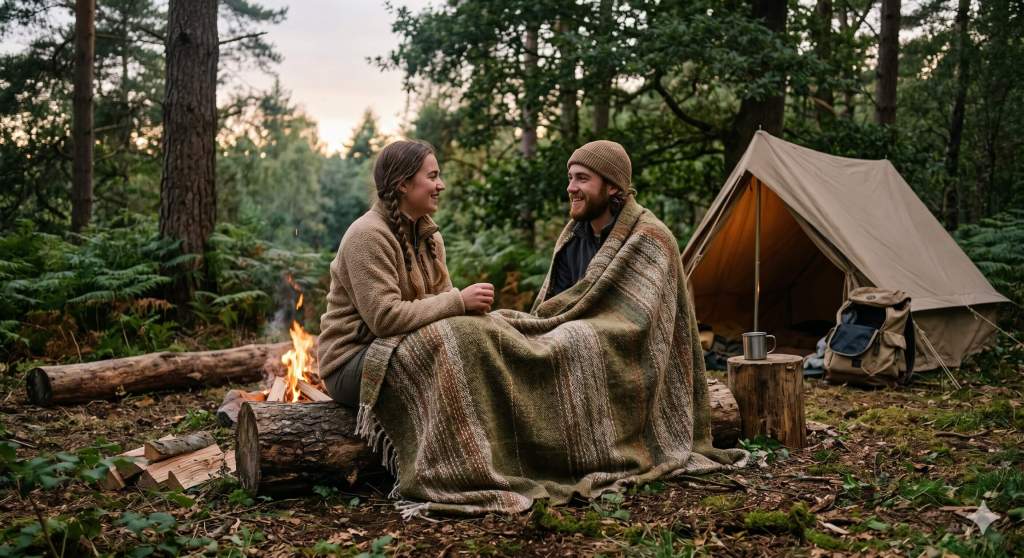
Camping gear is evolving far beyond sleeping bags and waterproof tents.
Around the world, designers, outdoor brands, and material scientists are developing a new generation of sustainable fabrics and insulation materials made from mushrooms, recycled fibres, seaweed, regenerative crops, and other bio-based innovations. These next-generation textiles are designed to reduce environmental impact, improve durability, and move outdoor gear away from petroleum-heavy synthetic materials.
What makes this especially exciting is that these innovations are not limited to high-end technical gear. Many of these materials could soon be used in everyday camping blankets, picnic rugs, travel throws, and outdoor bedding, creating warmer, lighter, and more sustainable adventures outdoors.
Here are ten of the most innovative sustainable materials shaping the future of camping blankets right now.
1. Mycelium Fibre (Mushroom-Based Materials)
Mycelium is the underground root structure of fungi. When grown under controlled conditions, it can form soft, leather-like or felt-like materials.
Most people know mycelium for vegan leather handbags and shoes, but researchers are also exploring softer mycelium textiles that could be used in insulation, padding, rugs, and eventually blankets.
The appeal is huge:
- It grows quickly
- Needs very little water
- Uses agricultural waste as feedstock
- Is biodegradable
Imagine thick, naturally insulating mushroom-fibre throws replacing synthetic fleece blankets in the future.
2. Bacterial Cellulose Fabric
This sounds futuristic because it is.
Bacterial cellulose is grown using microbes through fermentation — similar to how kombucha is made. The result is an ultra-fine natural fibre network that can be dried into flexible sheets or spun into textile-like materials.
Right now, it is mostly being explored for fashion and experimental design, but its softness and breathability make it interesting for lightweight blankets and breathable bedding materials.
Because it is lab-grown, production could eventually happen with very little land use compared to traditional fibre farming.
3. Pineapple Leaf Fibre (Piñatex)
Every pineapple harvest creates huge amounts of leftover leaves. Instead of burning or discarding them, companies are extracting fibres from the leaves to create durable natural textiles.
Piñatex is best known as a leather alternative, but pineapple fibres can also be woven into softer blended fabrics suitable for home décor and blankets.
This is a great example of turning agricultural waste into something valuable instead of creating more landfill.
Potential uses:
- Textured woven throws
- Decorative blankets
- Cushion fabrics
- Upholstery textiles
4. Seaweed and Algae Fibres
Seaweed-based fabrics are becoming one of the most exciting areas in sustainable textiles.
Seaweed grows incredibly fast, absorbs carbon dioxide, and doesn’t require farmland or freshwater. Some companies are already blending seaweed fibres into soft yarns that feel similar to cotton or viscose.
For blankets and bedding, seaweed fibres are especially interesting because they are:
- Breathable
- Naturally soft
- Moisture regulating
- Lightweight
They could become a popular option for cooling summer blankets and eco-friendly bedding.
5. Orange Peel Fibre
Luxury fabric made from orange juice waste? Surprisingly, yes.
Italian innovators developed a process that transforms discarded orange peels into silky cellulose yarns. The resulting material has a soft sheen similar to silk or satin.
While currently aimed at premium fashion, softer orange-based fibres could eventually be blended into luxury blankets, scarves, and loungewear fabrics.
It’s a beautiful example of circular design:
food waste becoming textile fibre.
6. Cactus Fibre Materials
Cactus-based textiles are attracting attention because cactus plants need very little water and can thrive in harsh climates.
Most cactus materials today are leather alternatives, but softer cactus-derived fibres and bio-resins are being explored for broader textile applications.
Future possibilities include:
- Soft woven throws
- Eco-upholstery
- Lightweight winter blankets
In a world facing water shortages, drought-resistant fibre crops could become increasingly important.
7. Banana Fibre
Banana plants produce strong natural fibres after harvesting fruit. Normally the stems are discarded, but they can actually be processed into surprisingly durable textiles.
Banana fibre has a slightly rustic texture, making it ideal for:
- Chunky woven blankets
- Artisan throws
- Sustainable interior textiles
- Layered home décor fabrics
It is also naturally biodegradable and supports agricultural communities by creating value from crop waste.
8. Hemp Fibre
Hemp is one of the oldest textile fibres in human history, but it is having a modern comeback.
Why? Because hemp grows quickly, uses little water, and requires fewer pesticides than cotton.
Modern hemp textiles are much softer than older generations of hemp fabric. Blended hemp fibres can now be used for:
- Heavyweight blankets
- Upholstery
- Durable bedding
- Thermal winter throws
Hemp is especially promising because it is already scalable and commercially viable today.
9. Bioengineered Spider Silk
Spider silk is famous for being incredibly strong while remaining lightweight and flexible.
Scientists are now producing spider silk proteins through fermentation instead of harvesting them from spiders. This could eventually lead to ultra-soft, ultra-strong biodegradable textiles.
Imagine blankets that are:
- Warm but lightweight
- Extremely durable
- Made without petroleum-based synthetics
While still expensive, spider silk biofabrication could become a major material category in the future.
10. Regenerative Wool Alternatives and Hybrid Biofibres
Some companies are developing hybrid materials that combine natural fibres like wool, hemp, algae, or cellulose with biodegradable binders and bio-based coatings.
The goal is to create fabrics that:
- Feel luxurious
- Last longer
- Shed fewer microplastics
- Fully biodegrade at end of life
For the blanket industry, this is especially important because fleece blankets made from polyester release microplastics every time they are washed.
Future sustainable blankets may combine:
- Hemp for strength
- Seaweed for softness
- Mycelium for insulation
- Bacterial cellulose for breathability
Why This Matters for Blankets and Home Textiles
Most blankets today are still made from synthetic materials like polyester, acrylic, or microfiber — all derived from fossil fuels.
These fabrics may be cheap and soft, but they:
- Shed microplastics
- Are difficult to recycle
- Often end up in landfill
- Depend on petroleum production
The next wave of bio-based fibres could completely reshape the home textile industry.
Future blankets may be:
- Compostable
- Naturally temperature regulating
- Made from agricultural waste
- Grown instead of manufactured
- Produced with dramatically lower emissions
And importantly, they could still feel luxurious, warm, and durable.
Sustainable natural fibres are no longer a niche experiment. They are becoming a serious alternative to synthetic textiles across fashion, interiors, and home goods.
From mushroom mycelium to pineapple leaves and seaweed yarns, these materials show how waste, biology, and design can work together to create a cleaner textile future.
The blanket sitting on your sofa ten years from now may not come from a factory filled with petroleum-based fibres. It may be grown from fungi, brewed in a fermentation tank, or woven from agricultural byproducts that once went to waste.
And that shift could change not only how textiles are made, but how we think about materials altogether.
Find Out More
If you want to explore how natural fibres and next-generation materials are shaping the future of camping blankets and outdoor comfort, these UK camping and outdoor brands are a great place to start.
UK Camping & Outdoor Gear Brands Using Recycled and Advanced Insulation:
- Snugpak — A West Yorkshire–based outdoor gear manufacturer known for sleeping bags, insulated blankets, and camp quilts using proprietary synthetic insulation systems designed for extreme conditions.
Their products show how high-performance insulation can evolve toward lighter, more efficient, and potentially bio-based fills in the future. - Rab — A UK alpine and expedition brand founded in Sheffield, using advanced insulation technologies including recycled synthetics and responsibly sourced down across sleeping bags and outdoor gear.
Rab is increasingly focused on circular design and lower-impact materials for cold-weather outdoor systems. - Alpkit — An independent UK outdoor brand producing camping and adventure gear with a strong sustainability focus, including repair programs, recycled materials, and long-life design principles.
Their approach reflects the shift toward durable, repairable outdoor textiles rather than disposable synthetics. - VOITED UK — A camping blanket specialist offering recycled ripstop outdoor blankets and insulated “pillow blankets” designed for vanlife, camping, and travel.
These blankets are a strong example of how recycled plastics are already being turned into functional outdoor comfort systems. - Terra Nova Equipment — UK-designed expedition gear brand known for high-performance tents and outdoor systems engineered for extreme environments.
While focused on shelter systems, their innovation pipeline reflects how technical fabrics and insulation systems are evolving for future camping textiles. - Selk’bag UK Distribution — A wearable camping blanket system made from recycled materials, designed for hands-free outdoor warmth and mobility.
A good example of hybrid blanket-insulation design already moving toward multifunctional outdoor comfort.
Articles & Guides About Sustainable Outdoor Fibres
- The Times: Best British-Made Textile Brands — A feature on modern British textile brands focusing on recycled wool, natural fibres, sustainability, and traditional weaving craftsmanship.
- Switchback Travel – Best Camping Blankets Guide — Detailed breakdown of wool, recycled, insulated, and weather-resistant camping blankets for outdoor use.
- Real Simple – Best Wool Blankets — Includes sustainable recycled wool options and explains why wool remains one of the best natural fibres for warmth, durability, and temperature regulation.
Keep up-to-date with camping tips and advice. Subscribe to the newsletter below:
 Camping Blankets UK | Collette Costello | Made in Manchester