Tag: fashion

  • How to Stitch Scrunchies

    Join this session to learn how to stitch Scrunchies. To help you practise sewing techniques and become more confident at sewing.

    To take part you will need:

    • Scrunchie making kit
    • Sewing Machine
    • Sewing Kit
    • Iron/ Protective Sheet
    • Bodkin or Large Safety Pin
    • Loop Turner

    The ‘Sewing for Success’ scrunchie kit will includes:

    • 1 x Paper pattern
    • 1 x Elastic Strip
    • 2 x Fabric Strips

    Note: The pre-cut fabric is only available in upgraded kits. You can learn how to cut your own fabric using the video below.

    How to cut fabric using pattern piece:

    How to Sew a Scrunchie Online Classes

    You will need to be able to:

    • Thread-up a sewing machine
    • Stitch straight stitch

    Introduction How to Sew Scrunchies

    To stitch scrunchies. Complete the tasks in the step-by-step videos below.

    Task 1 – Match Notches, Stitch Seam

    Task 2 – Fold, Iron and Stitch Side Seam

    For top tips on sewing seams, see videos below:

    What is a seam allowance?

    How to fit a seam guide

    Task 3 – Turn Inside Out, Loop Turn

    Note: You can still turn the fabric inside out without using a loop turner.

    Task 4 – Insert Elastic, Pin and Stitch

    Task 5 – Fold in Seams, Pin Edges

    Task 6 – Top Stitch Edges

    End of Session

  • Top 10 Dressmaking Tips Learn to Sew On-line

    Top ten tips for beginner dressmakers. Learn to sew like a professional.

    1. Invest in quality threads: If you’re going to spend your time making clothes, make sure that you are stitching them together with quality threads.
    2. Have your iron available: When you are dressmaking, you should be ironing all the time. Ironing out your seams flat and other areas of the garment, so your iron should always be available.
    3. Use interfacing: You need to make sure that you are interfacing areas of the garment that need it. So areas such as the neckline, cuffs and collars.
    4. Iron seams flat: When you have stitched a seam, make sure that you are ironing out your seam flat so that when you stitch your garment together, it looks neater.
    5. Match seams: When you are joining two pieces of fabric together and the two pieces have seams on them, such as the waist of a dress. Make sure that you match the seams first and pin them together before pinning the rest of the side of the fabric together.
    6. Pin from the middle: If you have two pieces of fabric that need to be pinned together, such as the side of a skirt. Start from the middle, pin there and then work your way outwards.
    7. Match middle notches. As in tip six, you need to pin from the middle and work your way outwards. So do look out for any middle notches and make sure that the middle notches are matching. You may find a middle notch on the neckline of a dress and on the facing them. Two notches need to match up before you then pin the rest of the edge of the fabric.
    8. Stretch Fabric: If you are joining two pieces of fabric and you have pinned them together, but you find that one of the pieces is maybe slightly too small. What you can do is you can stretch the shorter fabric slightly as you are pinning and stitching. Note this only works for fabric that isn’t stretchy.
    9. Measure from Waist Down: If you are making any adjustments to the hem of a skirt or a dress or trousers, always measure down from the waist, measure from the waist downwards, and get your length and do that all the way across the bottom of the hem before cutting it off. Then you can be sure that it is straight.
    10. Top Stitch Neck Facing: To stop your neck facing moving around when you are wearing your dress. What you should do is you should top stitch the neck facing in place. This is to secure the facing.
  • How to Gather Fabric, Add Ease Dressmaking

    When fabric is gathered, this is sometimes known as adding ease.

    Gathers need to be added to certain pieces of fabric when dressmaking to help it curve. For example when sewing a curved hem or fitting the shoulder of a sleeve.

    How to Add Ease Gathering

    There are many ways to add ease into a fabric. Traditionally ease is added to fabric by changing the setting on the sewing machine. By following the steps below:

    Machine Settings to Add Ease

    • Change the stitch length to long, between 4 – 5 setting.
    • Reduce machine tension to loose, between 0 – 1 setting.
    • Two parallel lines then should then be stitched, with a gap of 0.5cms.
    • Stitch alongside the edge of the fabric that you wish to be gathered.
    • The lines should be stitched within the seam allowance area.
    • Tie the threads together at one end of the fabric.
    • Then at the other end, gentle tug the bottom two threads.
    • Fabric should then start to move along the threads and gather.

    All sewing machines are different, so you may need to experiment with the settings. If you find the stitching is too tight or too loose, to gather the fabric.

    How to add ease to Sleeve?

    Ease should be added to the top of a sleeve, before fitting it to a garment.

    • The top edge of the sleeve needs to be gathered before fitting to garment.
    • The ease should be between the single and double notch on the sleeve.
    • When the sleeve is pinned to the garment, the ease may need to be tightened or loosened.
    • To ensure the notches on the sleeve and garment match.
    • The ease should be even and the gathers evenly distributed.

    Adding Ease to Hems

    If ease is not added to skirts with curved hems before sewing the hem. The hem will become pleated in areas and not lie flat.

    • When a hem is slightly curved, ease needs to be added to the edge.
    • Once the ease is added, it need to be evenly distributed.
    • The hem can be folded over and ironed flat, ready for sewing.
    • If the hem is pleating in areas, more ease may need adding or taking away.

    Easy Way to Gather Fabric

    Fabric can be gathered without having to add ease stitching. Instead gathers can be added using special sewing machine feet. When fabric is gathered this way, the gathers cannot be adjusted, they are stitched in place.

    See sewing machine fabric gathering feet below:

    for more sewing tips subscribe below:

  • How do you iron on interfacing before sewing? Beginners

    Interfacing is a fabric that is added when sewing garments. To help stiffen and support areas of the garment such as:

    • Cuffs
    • Waistbands
    • Collars
    • Neck facing

    Different Types of Interfacing

    Interfacing comes in different thicknesses, that can be used depending on the style of garment. For example heavy weight interfacing would work better for a winter coat and light weight for making summer dresses. There are two types of interfacing they are:

    • Iron-on Interfacing
    • Stitch-in Interfacing

    Top Tips for Interfacing:

    • When sewing I recommend using iron-on interfacing, as it does not move when sewing the garment.
    • Light-weight interfacing can be used for most garments, when dressmaking.
    • Instead of using heavy interfacing for heavy garments and bags. A few layers of calico can work better, to stiffen these items.

    How to Attach Iron On Interfacing Sewing

    Preparation:

    1. Cut your interfacing: Use your pattern piece as a guide to cut the interfacing to the exact shape you need. Aim for a slightly smaller size than the fabric piece to avoid excess glue seeping onto your ironing board.
    2. Set your iron: Refer to the care label on your fabric to determine the appropriate heat setting. Most inter-facings work well with a medium heat setting. However, it’s always recommended to test a small scrap of interfacing on the fabric beforehand to ensure it doesn’t scorch or melt.
    3. Prepare your pressing cloth: Use a clean, press cloth made from a thin, heat-resistant fabric like cotton or muslin. This helps protect your fabric and distributes heat evenly.

    Ironing:

    1. Place the fabric: Lay your fabric flat on the ironing board with the wrong side facing up.
    2. Position the interfacing: Place the interfacing on top of the fabric, ensuring the adhesive side (often rougher side) faces down directly onto the wrong side of your fabric.
    3. Press with the iron: Gently press the iron down firmly for 10-15 seconds on each section. Lift the iron straight up instead of sliding it to avoid shifting the fabric and interfacing.
    4. Repeat and check: Work your way across the entire piece, overlapping sections slightly to ensure complete adhesion. After pressing all sections, gently lift a corner of the interfacing to check if it’s securely bonded. If not, repeat pressing in that area.
    5. Cool and check again: Allow the fabric to cool completely before handling. Once cool, try lifting a corner of the interfacing again to ensure a secure bond.

    Additional tips:

    • Use a damp press cloth for heavier fabrics or those requiring more heat. Simply dampen the cloth, wring out excess water, and use it as instructed above.
    • Don’t use steam: Steam can reactivate the adhesive and cause the interfacing to shift.

    By following these steps, you can successfully iron on interfacing to your fabric and achieve a professional-looking finish in your sewing projects.

    For more sewing tips subscribe below:

  • Stitching Stretchy Fabric, Seams Beginners Guide

    Stretchy clothes need to be sewn together differently, to non-stretchy woven fabrics.

    Stretchy fabrics if stitched with a standard straight stitch, when stretched the thread will snap and come undone. Learn more about, “Different types of stretch fabrics and stitches”.

    How to Stitch Stretchy Fabrics

    When sewing stretchy fabrics together use a zig-zag stitch. This type of stitching will not snap when the fabric is stretched, instead it will stretch with the fabric.

    • To zig-zag stitch stretchy fabric, set your machine to zig-zag stitch. This stitch can be used to sew seams and hems.
    • The stitch does not need to be very wide, experiment with the width and length of the stitching.
    • A thinner zig-zag stitch may look better when top stitching hems and bias binding.

    Stitching Stretchy Fabric On Sewing Machine

    A domestic sewing machine can be used to stitch zig-zag stitch. Yet if you have an overlocker machine they are ideal for sewing stretchy fabrics.

    • Overlocker machines seam and overlock the edges of stretchy fabric at the same time.
    • This machine will stitch the stretchy fabric together, whilst sealing the edge of the fabric.
    • Be sure to check your garment pattern before doing this, as you may need to make your seam allowance smaller. Using a seam allowance of 0.5cm.
    • Straight stitch may be used on areas of the garment that don’t stretch. Such as when top-stitching neck facing.

    What Needle to Use for Stitching Stretchy Fabric?

    When stitching stretch fabric it is better to change the sewing machine needle. To use a needle that is especially designed to sew stretchy fabric.

    • Use a ball point jersey needle to stitch stretchy fabrics.

    How to Sew Stretchy Garments, Top Tips

    Top tips for sewing stretchy garments.

    • No darts, stretchy clothes may not need darts.
    • No ease, tops of sleeves may not need gathering.
    • No interfacing, it may rip when it is stretched.
    • No facing, often bias binding is used instead of facing.

    Use a cover stitch machine to finish stretchy fabric garments. A cover stitch machine can be used to top stitch the hems and necklines on clothes made with stretchy fabric.

    For more sewing tips subscribe below:

  • Sewing Machine Feet, Beginners Guide

    Sewing machines come with many weird and wonderful feet. Yet you can sew most cushions, bags and clothes using just 3 x machine feet.

    List of Sewing Machine Feet

    Below are the top 3 x machine feet that a beginners needs, when to learning how to sew:

    • Straight stitch foot – This is the foot usually already on the machine, to use for straight stitch or general sewing.
    • The zig-zag stitch foot – This foot has a wider hole, for the needle to move when zig-zag stitching. It may have slightly pointed, curved edges.
    • Zipper foot for fitting zips – The zipper foot has a flat side with a hole, to allow the needle to stitch closer to the zip. It can be single or double edged.

    Note: The zig-zag machine stitch foot, can also be used for straight stitch.

    What Machine Feet for Sewing Machine

    As you get more confident with sewing and using your machine. You may finding using the extra machine feet below useful. For photographs of the machine feet see “Ultimate Guide Machine Feet”:

    • Button hole foot – For stitching button holes, to the size of your button.
    • Roll hem foot – Use when stitching small hems of circular, flared skirts.
    • Elastic sewing foot – Stretches and stitches on elastic bands to your fabric.
    • Couching foot – Can be used for shirring, attaching thin elastic threads.
    • Gathering foot – Used to create slight gathers in fabrics and ribbons.

    As an extra try purchasing a ruffling foot. I love this foot, it is very large and costs more than a standard gathering foot. Yet you can make nearly everything with a length of gathered fabric and big ruffles.

    Singer Outlet has a wide section of machine feet to purchase, see “Accessories Sewing Feet”.

    • The ruffles on the dresses below were made with a ruffling foot.

    For detailed advice on the types of machine feet fittings, on different types of sewing machines. See section in post on “Snap on or Screw“.

    For more sewing tips subscribe below:

  • How to Stop Fabric Fraying, Over-lock Edges

    When sewing it is important to first stitch the edges of the fabric to stop it from fraying. This is called over-locking the edges and can be done with two types of stitches.

    How to overlock fabric edges for beginners guide

    Usually an over-locker sewing machine would be used to trim and stitch the edges of fabric. There are pros and cons to using an overlocker machine:

    • Overlocker Machine Overlockers trim and stitch the edges of fabric, to give it a tidy and professional finish.
    • Over-lockers are expensive and can be hard to thread-up. Yet they are a good investment if you are doing a lot of sewing.  

    How to Overlock Fabric without a Overlocker Machine

    There are other ways to over-lock fabric when you don’t have a over-locker machine:

    • Pinking Shears – Pinking shears can be used to slow fraying or on fabrics that don’t fray such as felts or stretch fabrics.
    • Zig-Zag Stitch – The simplest way for beginners to do this is by zig-zag stitching the edges.
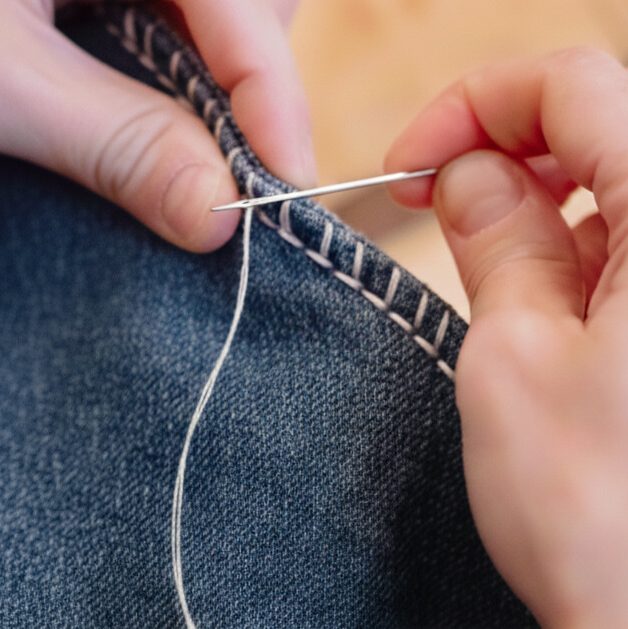
    • Hand-stitch – Hand-sewing can be relaxing and a good alternative to purchasing an over-locker machine. Use blanket stitch to overlock the edge of fabric by hand-stitching.

    How to zig-zag stitch overlock fabric edges

    Using a zig-zag setting on a domestic machine, will stop the edges fraying. Yet for a more professional look an over-locker machine is necessary.

    To use zig-zag stitches to overlock fabric edges, change machine settings use:

    • 2- 3 Stitch Length
    • 3- 4 Stitch Width

    Stitch close to fabric edge, without stitching over-edge of fabric. You can also use an overedge/ overcast foot, to overlock fabric on a domestic sewing machine.

    How to Overlock Stretch Fabric

    When over-locking the edges of stretch fabrics, zig-zag stitch and overlocker stitch can be used to seal edges.

    • Overlock stitches can be used to join two pieces of stretch fabric together, without overlocking the fabric pieces first.
    • If using over stitch to join two pieces of stretchy fabric. The seam allowance will needs to be reduced to 0.5cm, as the fabric will be stitched along the edge.

    For more sewing tips subscribe below:

  • How to Sew a Hem for Beginners

    A hem is when the edge of the fabric is folded and stitched. A hem is usually found at the bottom of skirts, trouser legs and sometimes sleeves.

    How to Hem Skirts, Trousers & Dresses

    Clothes are hemmed to finish the garment and to protect the bottom edges.

    To get a straight hem the fabric needs to be folded evenly. The hem allowance needs to be even.

    What is a hem allowance?

    The hem allowance is the amount the fabric is folded to stitch a hem is called the Hem allowance.

    • On straight skirts the hem allowance is usually between 2.5cm – 4.5cm.
    • On a flared circular skirt, a rolled hem allowance maybe as little as 0.5cm. 

    How to stitch a Hem

    Hems are easier to stitch if folded, pinned and ironed into place first.

    When sewing a hem, always stitch on the over-locked edge of the garment. This will help you sew straight and to stop the hem folding backwards when being worn.

    Different Types of Hems

    • Straight Skirts: If the hem is straight, without any curve. Like on a mini skirt or trouser leg. The hem allowance can simply be folded, then ironed and stitched down.
    • ‘A’ line skirts: If the hem is slightly curved, like on a flared “A” line skirt. The hem needs to be gathered slightly, this is sometimes called adding gathering ease. To help the hem curve slightly before it is stitched down. 
    • Circular Skirts: If the skirt is very, very flared, like on a circular skirt. Ease does not need to be added to help the hem curve. Instead the hem is stitch as a rolled hem.

    Top Tips:

    When sewing clothes it is best to sew the hem last. First try on the garment before pinning the hem, to make sure it is the right length. Hems can be stitched longer or shorter depending on the size of the body.

    How to Stitch Rolled Hem

    When sewing a rolled hem:

    • Use a small hem allowance of 0.5cm.
    • Gradually fold the edge and stitch.
    • Try using a rolled hem foot to roll the hem.
    • Use a slight zig-zag stitch to secure hem. 

    For more sewing tips subscribe below:

  • Top 10 Sewing Books for Beginners 2026

    Sewing books are perfect for beginners, who want to learn to sew but don’t know where to start.

    Top 5 Sewing Books for Beginners, Many Under £15!

    Sewing books for beginners make a perfect gift for friends and family. Yet it can be hard to know which sewing book to choose.

    See my guide below of the top 5 sewing books, available to buy now on Amazon!

    • Best Seller, Sewing Bee Book – Must Buy!

    As featured on the hit TV Show, The Great British Sewing Bee book. Includes 25 dressmaking projects, shop now!

    • Perfect for Beginners, 300 Sewing Techniques!

    This book includes everything a beginners needs to know about sewing. The sewing book is essential for anyone new to sewing – Shop Now!

    • Best for Learning to Sew Clothes, Free Dressmaking Patterns included!

    Learn to sew clothes in just one afternoon using this book, Make it Simple. Quick, easy to follow dressmaking projects for beginners, shop now!

    • Try Next! Beginner to Confident Sewer Book, Includes Free Patterns

    Dressmaking the Easy Guide is the perfect next step book for any beginner want to learn how to make their own clothes, shop now!

    • 30 Step by Step Beginners Projects

    This book Simple Machine Sewing, will help to build the skills and confidence of any beginner. Contains 30 easy to follow projects, including how to make bags, home accessories and clothes. Shop Now!

    • Sustainable Sewing Book – Zero Waste Save Planet

    This Zero Waste book shows you how make clothes from one piece of fabric, creating no waste. Perfect for the eco-warrior in your life, shop now!

    Top 10 Best Sewing Books for Beginners

    The best sewing for beginners UK books are listed below. Included are books for complete sewing beginners to confident dressmakers. Covering everything from how to stitch basic stitches, to pattern cutting and toile making.

    Best for learning how to use sewing machine and basic stitches:

    Best for learning dressmaking and pattern cutting:

    Can you learn to sew from a book?

    Yes, you can definitely learn to sew from a book. Sewing books provide step-by-step instructions, diagrams, and photographs to guide you through the process of sewing. They can also teach you about different sewing techniques, fabrics, and patterns.

    Yet if you are serious about learning to sew, join a beginners online sewing class in addition to reading sewing books. This will give you the opportunity to practice what you learn and get feedback from an experienced sewing teacher.

    Where to buy sewing books U.K?

    1. Amazon: Amazon is a great place to find a wide variety of sewing books at competitive prices.
    2. Barnes & Noble: Barnes & Noble is another great option for finding sewing books. They have a large selection of books in stock, and you can also order books online for in-store pickup or shipping.
    3. Craftsy: Craftsy is an online retailer that specialises in craft supplies, including sewing books. They offer a wide variety of books, from beginner guides to advanced techniques. You can also find video classes and other resources on their website.
    4. Joann Fabrics: Joann Fabrics is a popular fabric store that also sells sewing books. They have a selection of books for all skill levels, and they often have sales on their books.
    5. Etsy: Etsy is a great place to find unique and handmade sewing books. You can find books by independent authors and designers, as well as vintage sewing books.

  • Craft Your Creativity: The Best Sewing Kits with Fabric for Adults

    If you’re ready to dive into the creative world of sewing, there’s no better way to start than with a well-curated sewing kit. Crafting with sewing kits isn’t just about fixing buttons or repairing hems—it’s an opportunity to make unique projects like tote bags, garments, or decorative pieces. Whether you’re a beginner or a seasoned crafter, finding the right sewing kit with fabric can transform your creative ideas into reality.

    In this guide, we’ll explore different sewing sets for adults, especially focusing on kits designed to help you make new things from scratch. Let’s dive in!

    Why Choose Craft Sewing Kits for Adults?

    Craft-specific sewing kits offer a ready-made experience where you can unleash your creativity. These kits are designed with adults in mind, providing:

    • Project Inspiration: With pre-designed projects, you get an instant direction for your creativity. From cute home decor to stylish wearables, you’ll always have something new to make.
    • Convenience: Everything you need—fabric, patterns, instructions, and tools—is neatly packaged. This saves time and effort, especially for those new to sewing.
    • Skill Development: Craft kits offer step-by-step instructions that can help beginners learn and help experienced sewers practice new techniques.

    Types of Craft Sewing Kits for Adults

    1. Sewing Kits with Pre-Cut Fabric

    These kits are a dream come true for those who want to dive right in. With sewing kits with fabric, you get pre-cut fabric pieces, saving you the trouble of measuring and cutting. These kits are especially useful for beginners, but even experienced sewers love them for quick, hassle-free projects.

    For example, Craftsy offers a range of project-based kits including everything from beginner-friendly pillow covers to more intricate quilt designs. Their kits come with all the materials you need, along with clear instructions.

    2. Sewing Kits for Accessories and Home Decor

    Want to sew something practical or decorative? Consider a sewing kit specifically designed for creating home decor or accessories. We Are Knitters offers stylish kits for crafting chic tote bags and pillowcases. These kits come with all the necessary fabric, patterns, and tools. They are a great way to dip your toes into accessory making or home decor without the intimidation of starting from scratch.

    3. Clothing Sewing Kits

    If you’re an adult looking to try your hand at making clothes, there are kits designed precisely for this purpose. Companies like Sew Over It specialise in clothing kits that come with everything you need to sew garments like skirts, blouses, or dresses. These kits include pre-cut fabrics, patterns, and clear step-by-step instructions, making them an excellent choice for adults ready to explore garment making.

    Another good option for beginners is Tilly and the Buttons, which offers simple, stylish garment sewing kits for adults. Their focus on easy-to-follow patterns and quality materials makes them ideal for beginners wanting to sew their first pieces of clothing.

    What to Look for in Craft Sewing Kits

    1. Skill Level: Select a kit that matches your experience. Beginners should look for simpler projects like pillow covers or basic accessories. Experienced crafters might prefer more challenging kits like garments or quilts.
    2. Type of Project: Decide what kind of project you’re interested in—clothing, accessories, or home decor—and choose accordingly.
    3. Included Materials: Check what’s included in the kit. Good kits provide all necessary materials, from fabric to zippers, along with detailed instructions.
    4. Reviews and Brand Reputation: Opt for trusted brands like Craftsy, We Are Knitters, Sew Over It, and Tilly and the Buttons for high-quality kits and reliable instructions.

    Top Picks for Sewing Kits with Fabric for Adults

    Here are some top recommendations for sewing kits with fabric and craft sewing sets for adults:

    1. We Are Knitters Craft Sewing Kits: Known for their minimalist and stylish designs, We Are Knitters offers a wide range of sewing kits for creating trendy bags, cushions, and even stylish wearables. These kits come with all the necessary fabric, threads, and easy-to-follow patterns. Explore their kits here.
    2. Sew Over It Clothing Sewing Kits: If you’re interested in making your own clothes, Sew Over It offers a variety of clothing kits complete with patterns and fabrics. They are especially known for their vintage-inspired designs. Discover their range.
    3. Craftsy Beginner Kits: Craftsy is perfect for beginners who want to start simple. They offer kits for pillowcases, small bags, and beginner-friendly quilt projects. Their kits include all materials, along with video tutorials that make it easy to follow along. Shop Craftsy Kits.
    4. Tilly and the Buttons Garment Kits: Known for their clear, detailed instructions, Tilly and the Buttons offers a variety of clothing kits ideal for beginners. They have kits to make skirts, tops, and dresses, helping you learn garment construction step-by-step. Check out their selection.

    Final Thoughts

    Craft sewing kits are an excellent choice for adults who want to explore their creativity and develop a valuable new skill. Whether you’re looking to make clothing, accessories, or home decor, these kits offer a fun and approachable way to start. With brands like We Are Knitters, Sew Over It, Craftsy, and Tilly and the Buttons, you’re sure to find a sewing kit that inspires your creativity.

    So, grab a kit, clear a space at your crafting table, and get ready to start sewing your own unique creations!

    If you enjoyed this post for more subscribe below: