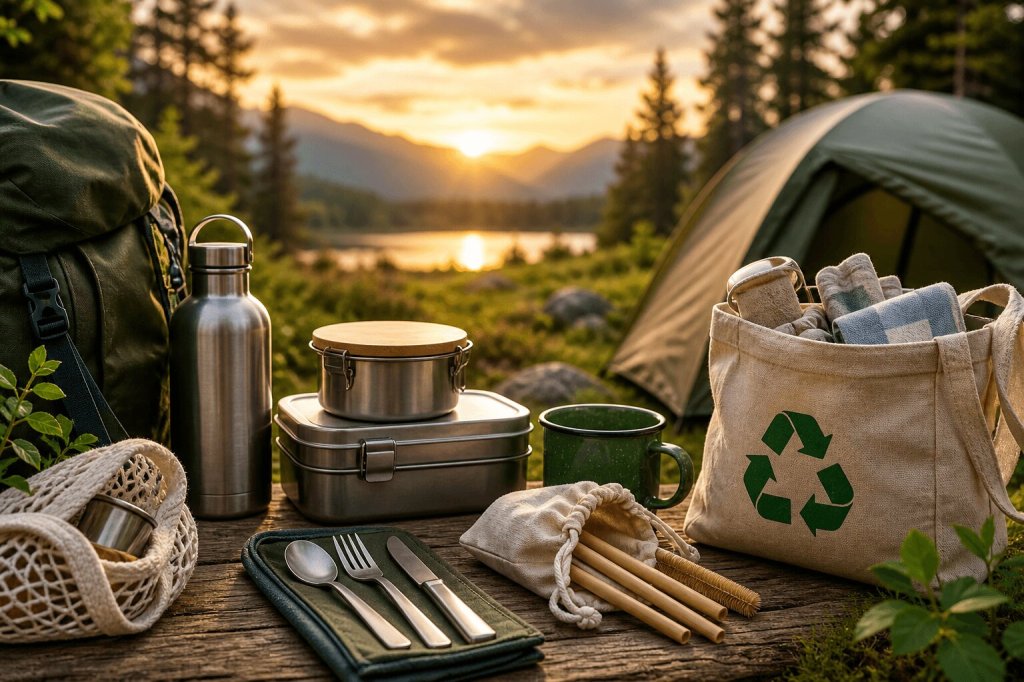
Camping is often seen as a low-impact way to enjoy nature, but in practice, it can generate a surprising amount of waste. Many campers rely on single-use plastics such as water bottles, food wrappers, disposable cutlery, and hygiene products. On top of that, cheaply made gear often breaks after one or two trips and ends up in a landfill. These habits can quietly undermine the very environments people go out to enjoy.
The good news is that camping can be one of the easiest activities to make more sustainable. With some thoughtful planning and a few swaps, you can reduce waste, save money, and have a more intentional outdoor experience.
Planning and packing
- Pack only what you truly need:
Bringing fewer items reduces clutter, prevents waste, and lowers the environmental cost of transporting unnecessary gear. - Choose lightweight gear to reduce fuel use:
Lighter loads mean your vehicle uses less fuel, which helps cut down on carbon emissions during travel. - Borrow or rent equipment instead of buying new:
Sharing gear avoids unnecessary manufacturing and is ideal for items you will only use occasionally. - Buy second-hand camping gear:
Pre owned equipment extends the life of products and reduces demand for new resource-intensive production. - Avoid duplicate items:
Taking only one of each essential item helps prevent overconsumption and keeps your packing efficient. - Plan meals in advance to reduce waste:
Meal planning helps you bring the right quantities and avoid throwing away unused food. - Prep food at home to avoid packaging:
Chopping and portioning food ahead of time reduces the need for packaged convenience items. - Use a checklist to avoid overpacking:
A simple checklist keeps you focused on essentials and prevents impulse packing of unnecessary items. - Travel closer to home to cut emissions:
Shorter journeys significantly reduce your overall environmental impact from transport. - Carpool or use public transport:
Sharing a ride or taking public transport lowers the number of vehicles on the road and reduces emissions.
Reducing single use plastics
- Bring a reusable water bottle;
Refillable bottles eliminate the need for disposable plastic bottles that often end up as waste. - Use refillable containers for food:
Reusable containers keep food fresh while cutting down on single use packaging. - Swap cling film for reusable wraps:
Reusable wraps made from materials like waxed cloth can be used again and again instead of plastic film. - Pack reusable shopping bags:
These are useful for carrying supplies and prevent the need for plastic bags at shops. - Use metal or bamboo cutlery:
Durable utensils can be washed and reused, avoiding disposable plastic forks and spoons. - Bring a reusable coffee cup:
A reusable cup helps you avoid takeaway cups, which are often difficult to recycle. - Avoid individually wrapped snacks:
Buying larger portions and dividing them yourself reduces excess packaging. - Use refillable toiletry bottles:
Small refillable bottles let you bring only what you need without buying travel-sized plastics. - Switch to bar soap and shampoo:
Solid toiletries last longer and usually come with little or no packaging. - Skip disposable plates and cups:
Reusable dishware is sturdier and significantly reduces waste during meals.
Sustainable food and cooking
- Buy food in bulk before your trip:
Bulk buying reduces packaging and often saves money as well. - Choose foods with minimal packaging:
Opting for loose or simply packaged items cuts down on the waste you need to carry and dispose of. - Store food in reusable jars or tins:
These containers are durable and help keep food organised and protected. - Bring a cooler instead of disposable bags:
A good cooler keeps food fresh without relying on single-use storage solutions. - Compost food scraps where possible:
If facilities allow, composting returns nutrients to the soil instead of sending waste to landfill. - Cook simple meals with fewer ingredients
Simpler meals reduce packaging, prep time, and leftover waste. - Avoid food waste by portion planning:
Estimating portions carefully ensures you eat what you bring. - Bring a reusable cloth instead of paper towels:
Cloth towels can be washed and reused many times, unlike disposable paper products. - Use biodegradable dish soap:
Eco-friendly soap breaks down more safely in the environment when washing up outdoors. - Eat local produce to reduce food miles:
Choosing locally sourced food reduces the environmental impact of transportation.
Eco friendly gear choices
- Invest in durable, long-lasting gear:
High quality equipment may cost more upfront, but it reduces waste over time by lasting longer. - Repair equipment instead of replacing it:
Fixing damaged items extends their life and prevents unnecessary disposal. - Choose products made from recycled materials:
These items help create demand for recycled resources and reduce reliance on raw materials. - Avoid cheap gear that breaks easily;
Low quality products often fail quickly and contribute to landfill waste. - Use solar-powered lights or chargers:
Solar energy provides a clean and renewable power source while camping. - Rent speciality gear for occasional trips:
Renting items like kayaks or advanced equipment avoids buying things you rarely use. - Choose multi-use items:
Items that serve more than one purpose reduce the total number of things you need to bring. - Look for repairable products with warranties:
Products designed to be fixed are more sustainable than those meant to be discarded. - Avoid fast fashion outdoor clothing:
Durable and responsibly made clothing lasts longer and reduces textile waste. - Store gear properly to extend its lifespan:
Taking care of your equipment ensures it remains usable for many trips.
Waste reduction and disposal
- Follow the “pack it in, pack it out” principles:
Taking all your waste home ensures you leave no trace behind in natural areas. - Separate recyclables from general waste:
Sorting waste properly increases the chances that materials will be recycled. - Bring reusable trash bags:
Durable bags can be used on multiple trips and reduce the need for disposable liners. - Dispose of waste at designated facilities:
Using proper disposal points prevents pollution and protects wildlife. - Avoid leaving any litter behind:
Even small items can harm ecosystems and animals if left in nature. - Pick up litter you find along the way:
Helping clean up improves the environment for everyone and protects wildlife. - Minimise packaging before you leave home:
Removing excess packaging in advance reduces what you need to carry and throw away. - Use biodegradable products when possible:
These products break down more naturally and reduce long term environmental impact. - Keep food waste sealed to avoid wildlife issues:
Proper storage prevents animals from being attracted to campsites and keeps them safe. - Leave your campsite cleaner than you found it:
Going the extra step helps preserve natural spaces for future visitors.
Sustainable camping is not about strict rules or perfection. It is about making better choices where you can. By reducing single-use plastics, choosing durable gear, and managing waste responsibly, you can enjoy the outdoors while protecting it at the same time.
Further reading: sustainable camping in the UK
If you want to go deeper, these guides offer practical, UK relevant advice on eco friendly camping, waste reduction, and leaving no trace:
- Environmentally conscious camping tips (Hampshire County Council)
A practical UK guide covering biodegradable products, reusable water solutions, and solar powered gear for campers. - Wild camping best practices (Lake District National Park)
Includes guidance on respecting landscapes and following “leave no trace” principles in sensitive environments. - Sustainable travel tips (Met Office UK)
Covers low impact travel choices, local food sourcing, and reducing emissions when planning outdoor trips. - Top tips for going greener (Middlesbrough Council)
General sustainability advice including reducing waste, buying less, and choosing longer lasting products. - Camping and caravanning safety (Nottinghamshire Fire Service)
While focused on safety, it reinforces reducing waste and keeping campsites clean to prevent environmental damage. - Camping and caravanning safety advice (Devon and Somerset Fire Service)
Highlights responsible campsite behaviour including waste removal and safe use of equipment. - Camping safety advice (Northumberland Fire and Rescue)
Emphasises keeping campsites tidy and removing rubbish, which supports sustainable camping practices. - Camping safety guidance (Cheshire Fire and Rescue Service)
Provides guidance on responsible equipment use and reducing environmental risks while camping. - –Sustainable shopping and consumption tips (Arun District Council)
Useful for choosing longer lasting, eco friendly camping gear and reducing consumption. - Camping in wind and rain advice (Met Office UK)
Focuses on preparation and choosing durable gear, which helps avoid waste from damaged equipment.
Why these matter
Many UK organisations emphasise the same core idea: “leave no trace” and reduce waste wherever possible. This includes using biodegradable products, taking all rubbish home, and choosing durable gear that will not need frequent replacement.
Together, these resources reinforce that sustainable camping is not just about what you bring, but how you behave in natural spaces.
Keep up-to-date with camping tips and advice. Subscribe to the newsletter below:
 Vintage Camping Blankets UK | Collette Costello