Take a journey into the past, see my collection of storytelling fabrics below.
I am a storyteller and I love the past. My first collection of fabrics “Victorian Britain” was inspired by my Nanna’s stories.
Fabrics Inspired by History
“My Nanna taught me how to sew when I was a little girl. She would tell me stories about her Victorian childhood. To preserve her stories I turned them into a vintage fabrics.” Collette Costello
Mid-century inspired fabric collection by Manchester designer Collette Costello.
As a child, my kitchen was decorated with the most amazing 1970s retro pattern wallpaper. Our living room was full of what is now classic retro 1960s furniture, including a teak G plan sideboard. This collection is inspired by these mid-century interiors.
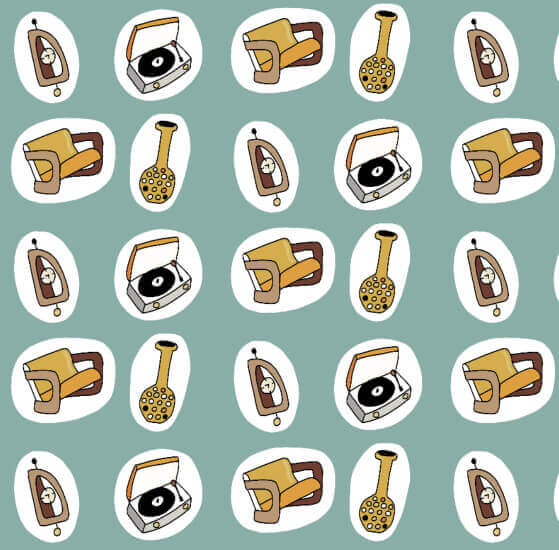
Dinner Party Night Dinner party night, Buddy Holly is playing on the record player. Cocktails are served in curved glasses. The dancing in full swing, everyone is a jiving and a bopping.
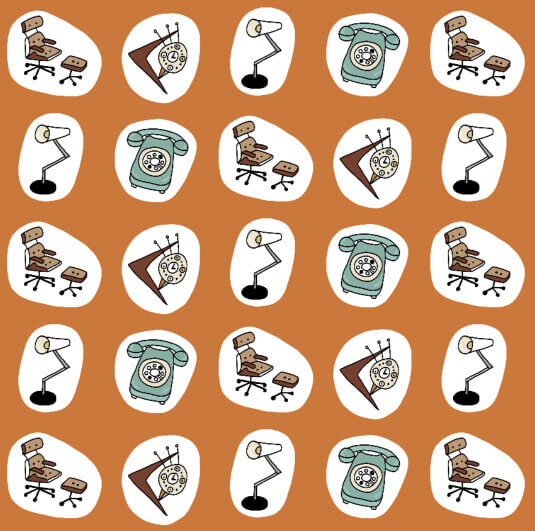
Office Business
The phone ringing in the office, appointments to be made. Wood veneer cladded walls, shag carpet and classic Eames chair. Time to do business, the clock is ticking, deals to be made.
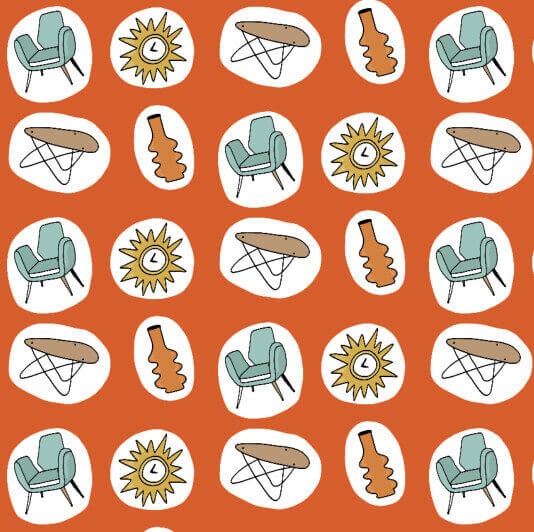
Mid-century Days Open plan living is all the rage, floor to ceiling windows let in so much air and light. Days are easy spend lounging. A morning trip to the supermarket, pop dinner in the microwave, jobs are quickly done.
Bursting to the Stars Out with the old and in with the new. Everyone crowds round the television in excitement, to watch the space race. Could it be true that a man could really step foot on another planet, step foot on the moon?
Mid-century Britain
Below is a story of a women living in Mid-century Britain. Based on true stories and facts. That inspired the fabrics above.
Linda has just left school at 16. She will be starting her first job as a secretary in an office on King Street in Manchester. Linda attended the local comprehensive school. She did not pass the 11+, so grammar school was not an option. Even so employers came to meet her and the other girls at school. Keen to offer them jobs, to fill the booming jobs market. They were offered jobs in offices and even in developing computers at Siemens.
Trained in touch type at school, Linda would do basic administrative work. Only men became managers. Linda would only work until she got married and had children. Then she would lose her job and become a housewife.
Now she did have a job, she had freedom. Linda could rent a room in a boarding house, away from her family. Go dancing at the “Ritz” and “Stella Maris”. Jiving to live bands and records. She loved rock and roll stars such as Buddy Holly, Elvis and Cliff Richard.
When it was time to marry, Linda dreamed of a new style house, with large windows and garden. Maybe one of the “Sunshine Houses” on Irlams o’th height. Or a newly build home in the “Garden City”, in the suburbs of Wythenshawe. She would fill the house with new, modern furniture. No old style, heavy drab, Victorian furniture. Instead bubble chairs, starburst clocks, Emas style furniture and her own telephone. Life would be good, she felt her future was bright.
Retro 1970s Fabric U.K
My childhood home was decorated with 1970s patterns. Curtains, wallpapers with bold, yellow and orange prints. The living room was packed with mid-century style furniture and the bathroom had an avocado suite.
I was actually born in the early 1980s, yet remember people still dressing in 1970s style fashion. Flared trousers, corduroy skirts, dresses made in psychedelic floral prints. Pattern was everywhere, textile designers such as Shirley Craven. Made bold, geometric, abstract prints, popular in 1970s Britain. Boutiques like Biba sold dresses that has bellowing sleeves and gathers. Designed in romantic styles. Like those found in clothes worn by bands, such as Fleetwood Mac.
The 1970s style I always loved, even before it became cool again. As a teenager I dressed in 1970s style fashion and listened to 1970s funk music. Shopping in Manchester’s northern quarter and Affleck’s Palace. For vintage style fashion, made in exciting 1970s printed fabrics. These bold patterns inspired me to go on to become a textile designers. Now designing my own collections of vintage style, retro fabrics. Like 1970s prints, my fabrics are bold, fun and colourful.
1970s retro dressmaking fabrics have had a revival in recent years. Due to loose fitting 1970s style baby doll dresses, becoming in fashion. Independent designers such as Dream Jeanie” have followed this trend. Creating original 1970s retro dressmaking fabrics. By up-cycling old curtains, quilts and table clothes. To make retro style dresses.
Orla Kiely made retro upholstery fabric in the U.K fashionable again. Her bold geometric fabric prints, in mid-century colours. Brought colour and pattern back into U.K homes. The “70s House Manchester”, by Estelle Bilson. Sell amazing reproduction, 1970s retro upholstery fabric. The “70s House” is not just a on-line fabric shop. Owner Estelle Bilson is a designer, that lives and breathes the 1970s. Her home is decorated purely in original 1970s decor, which she rents out for photoshoots and events.
Vintage fabrics collection “Victorian Britain”. By Manchester fashion designer Collette Costello.
This collection captures the stories told my Nanna, about growing up in inner city Salford. During the early 1990s. A world of smoky chimneys and cobbled streets. See the fabrics these stories inspired below:
More Tea Dear? The parlour is set for tea and biscuits, table laid with the best cloth and China cups. Flames crackle in the small cast iron fireplace, awaiting the special guest yet to arrive.
Lark Hill Place Take a trip down to “Lark Hill Place”, lined with street lamp that have a warm, cosy glow. Behind tall iron gates, are houses where cats lounge in net covered curtains.
Ale House Shiny tiles and brass fitting adorn the walls, the air is thick with music and singing. Men huddle in corners playing cards, dominoes, with a pint of ale at hand.
Platform 9 Smoke bellows from the train, piles of battered, leather trunks are being loaded into carriages. Ladies in fine hats wait on the platform edge, eagerly clutching their train tickets.
My Nanna’s Victorian Childhood Stories
Growing-up in inner city Manchester. Born into the terrace streets next to Salford Cathedral. My Nanna spent her childhood in a world found in Charles Dicken’s novels. A world with smog filled streets, cotton mills and poor houses. She was descended from a family that owned Shorrock’s music hall in Chorlton. I loved hearing her stories about a bygone age. We would visit “Lark Hill Place” in Salford Museum together, a recreation of an old Victorian street. This would really bring her stories to life.
My Nanna talked about strict Victorian teachers, church ran schools. She wore brown pinafores with clog shoes. Her shoes would create sparks, as she ran across the cobbles streets. Streets where workers were woken for 6 pence by the “knocker-upper”, tapping on the window until they rose. Life was hard, children left school at 14, they were adults then allowed in pubs. My Nanna started work in a mill factory, as a sewing machinists. Working for the famous rain coat maker Mackintosh, at their Manchester factory.
After a weeks work people still struggled, the Pawnbrokers waited on every corner. People would be forced to pawn their Sunday best suits on a Monday, buying them back again on a Friday. There was no NHS, no benefits, a trip to the dentist was filled with fear. My Nanna spoke of how the dentist’s wife would sit on patients needing tooth extracts, to stop them moving. Pain relief, medicines were luxuries.
Sadly, people were so poor that on payday at the end of the week they would buy back their suit from the pawnbrokers. To wear it to church on Sunday, then sell it back to the Pawnbrokers on the Monday to get through the week.
The people had nothing she said, but they had their pride. Front door steps were always polished, neighbours helped each other. People were generous and shared what little they had. Community was everything in the good old days.
The sewing machine that I learned on was a Janome 1950’s semi-industrial. It weighed a tonne and aged just 9 I had to ask an adult to lift it on the table for me. The machine belonged to my Nanna, who had been a factory machinist. She worked for Mackintosh based in Manchester, the famous company that made raincoats.
Nanna Sewing History
It was my Nanna then that taught me how to sew. The machine was fast, yet my Nanna showed me how to handle the fabric like a professional machinist would. She would tell me stories about how in the factories you were not a respected machinist unless the needle had stitched through your finger. This proved you were sewing fast and not afraid of the machine. When it did the machinist would have to sit with the needle in their finger, waiting for the engineer to unscrew the machine to get it out.
Learning how to sew at such a young age led me into studying textile/ fashion and going on to teach fashion. I have used many sewing machine from industrial machines, over-locker machines, cover-stitch machines, Cornelly machine, Irish embroidery machines and domestic machines.
Victorian Fabric Prints UK
Victorian printed fabrics, were preserved for wealthy British women. Printing fabrics was expensive and slow. Done by the process of wood block printing. The Victorians used printed fabrics mainly for interior textiles. Such as wallpapers and upholstery fabrics. Fashion fabrics were embroidered or woven instead.
William Morris founder of the Art & Crafts movement. Designed fabric prints in repeat patterns, inspired by nature. Featuring birds, leaves, encased in entwining vines. His prints defined the Victorian style, dark colours and heavy decorated patterns. William Morris patterns are still popular today. Liberty of London, still sell his prints. Modern fashion designers such as “Plum and Pigeon”. Use these fabrics to make vintage style dresses, with a romantic twist.
Victorian fabrics are antiques now. Yet Victorian reproduction fabrics have had a revival. In the form of steampunk fashion. The Victorian style fabric popular with steampunk cosplay fans. Is more in the style of Victorian illustrations, than the fabrics worn by actual Victorian people. Steampunk fabric is often printed with original drawings, from Victorian medical journals and advertisements. Unlike the floral, romantic patterns designed by William Morris.
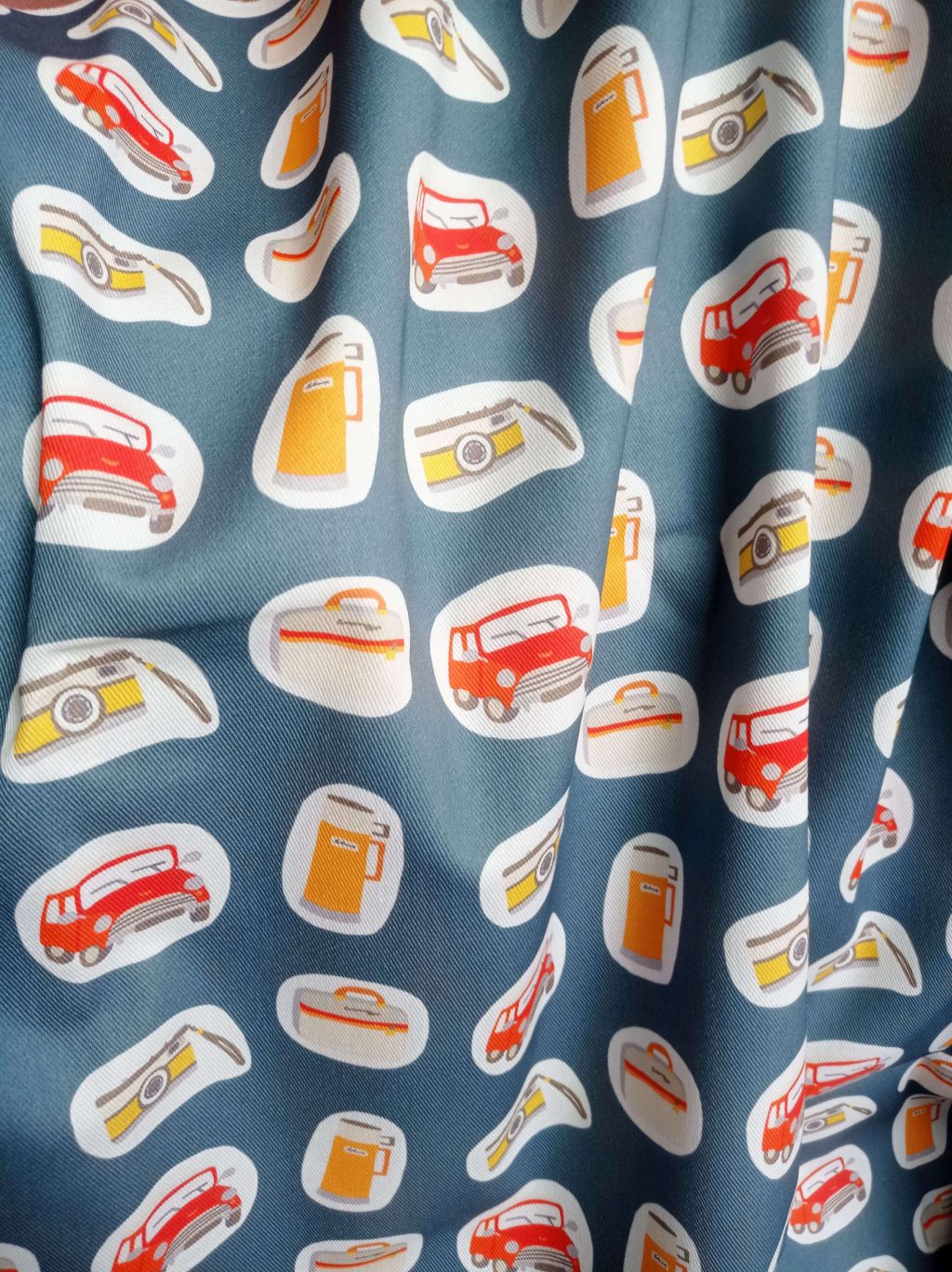
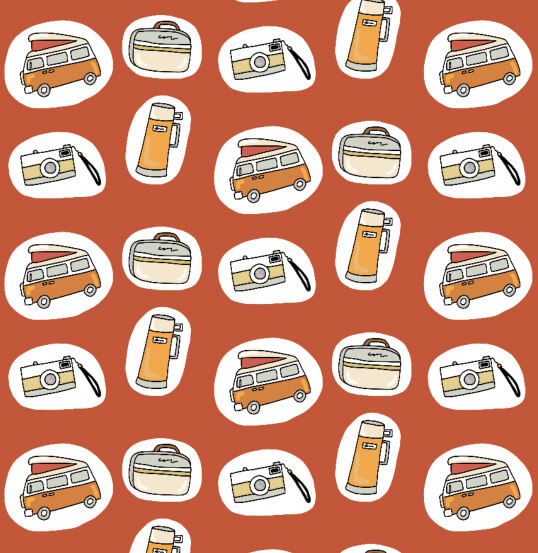
Classic Vintage Cars and Caravans, vintage fashion collection. By Manchester fashion designer Collette Costello.
My pride and joy is my original vintage Eriba Pan caravan. Old cars and caravans have so much style. They have a history, previous owners, trips they have been. This collection is inspired by classic vehicles and their stories.
Dancing Night All dressed-up for a night of dancing with the girls. Wearing a flared skirt, cat eye glasses and heels. Travelling in the “Mini” copper, with a portable record player to get the party started.
Campfire Evenings Lazy camping evenings, in the Eriba Pan caravan. Toasting marsh-mellows on the campfire, drinking hot chocolate. Enjoying gazing at the star in the clear night sky.
Drive to the Country Driving in the Beetle car, through the rolling hills of the Lake District. For a relaxing picnic by the lake.
Beach Walks Packed-up in the VW camper-van next to the beach. Time to watch the sea with a cup of tea.
Vintage Travel in Britain
Below is a story of a people living in 1960s Britain. Based on true stories and facts. That inspired the fabrics above.
Time for a Sunday drive out for lunch. A visit to pretty, pristine “Preston” this time. The family pile into the “Mini” copper. Made by the British Motor Corporation it is a car that can be trusted. Much excitement is the car, it will be their first trip on a motorway. On the first ever motorway built in the U.K, the Preston Bypass. There is no speed limited, so they will be able to speed down the 8 mile stretch. Lunch will be had the service station a real treat. Where they can climb the viewing tower and watch the cars wizzing along.
The next trip will be in summer, the new motorway makes visits to “Lytham St Annes” quick and easy. A camping trip in the family VW campervan. Days would be spent at the beach, playing in the sea and flying kits. A trip to the arcades, with fish and chips on the way back to the campsite. Making happy family memories.
1960s Fabric Retro UK
Britain in the 1960’s exploded into colour. Brightly coloured pop art, mod dresses were all the rage. 1960s fashion fabrics, came in bold geometric shapes and colours.
Britain in the 1960s was booming. Young people had more disposable income than every before. Job opportunities were everywhere. Great music, art and fashion was coming out of Britain. The Beetles, David Hockney, Mary Quant were big names. The trendy Carnaby Street London, was the place to be seen shopping for fashion. In designers boutique such as Mary Quant’s Bazaar store.
Women gained freedom, independence in the 1960s. Young women, teenager had their own style. Wearing short skirt, PVC boots and shift dresses. These clothes were perfect for dancing the “Bop”, after a day working as a typist in an office.
1960s vintage fabrics. Have bold flower power prints, patterns with repeat geometric shapes. Famous 1960s textile designers like “Emilio Pucci”and “Zandra Rhodes”. Designed fabrics in psychedelic, hippy prints. These patterns looked great on Mod Dresses. Worn by the trendy women of 1960s, U.K. The invention of man-made fabrics, allowed for bright colour palettes. Polyesters, nylons fabrics were great for dying, printing in bright colours. They would not fade after washing.
Vintage 1960s fabrics are becoming more rare. They are expensive, classed as collectables now. “Heals” fabrics, by Barbara Brown, sell for hundreds of pounds. If you want to sew your own 1960s style shift dress. Buying 1960s reproduction fabrics can be a good option.
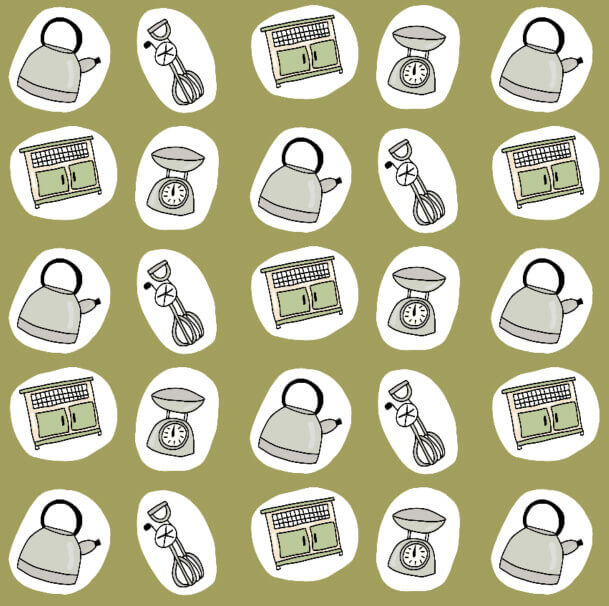
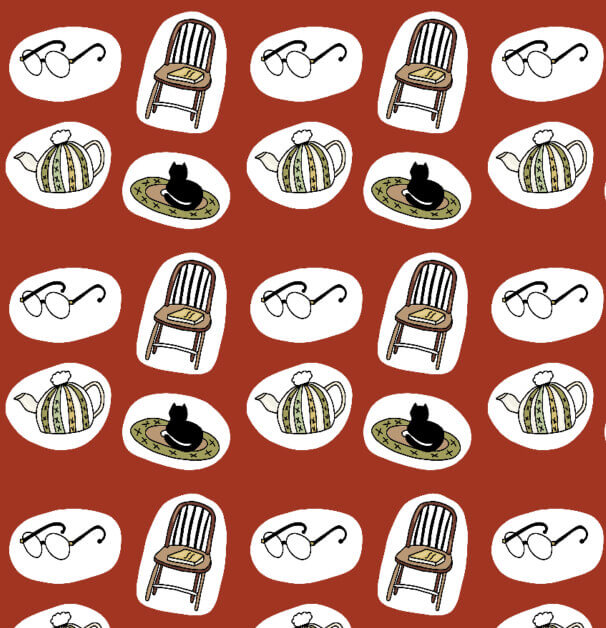
Home and Kitchen, vintage fashion collection. By Manchester fashion designer Collette Costello.
Going to my Nanna and Grandads house was like taking a step back in time. I remember how their house was so cosy, like being in the 1930s, 1940s. My Nanna taught me to make jam, bake pies, and knit. This collection is inspired by my visits.
Jam Making Morning spent blackberry picking, along the country lanes. The sugar is weighted, jars opened and water boiled. Ready for an afternoon in the pantry making jam.
Pie Making The Aga is warming the tiled kitchen floor, time to get the chicken from the larder. Flour, butter for a lovely crust, with a dash of milk. Chicken pie and gravy made for supper tonight.
Home Sweet Home A cold wintery Sunday afternoon. The cat is curled-up next to the coal fire, getting warm on the rug. Time to settle down with a pot of tea and a good book.
Knitting Break Front door step scrubbed, window cleaned with vinegar and newspaper. Time for a spot of knitting from the women weekly, whilst watching the television.
Life Post-war Britain
Below is a story of a women living in post-war Britain. Based on true stories and facts. That inspired the fabrics above.
The make, do and mend generation. Lilly has lived through the war, World War II. It is now pre-war Britain and rationing is still in place. Men have returned from the war, many are troubled. They dreamed of coming home, where women like Lilly kept the home fires burning.
Lilly worked during the war as Manager, in an ammunitions factory in Manchester. Bombing was fierce during the Manchester blitz. As fighter planes targeted Salford docks and Manchester warehouse. Lilly saw Salford Royal hospital get bombed and helped with casualties. After a night of bombing, finding refugee in air-raid shelters. She still had to go to work the next day and do a full days work. When war end, so did her management job. The government made it clear, men needed jobs and women were needed in the home.
Lilly was happy to live a quiet life now, as a housewife. She never threw anything away, using every scrap of food and fabric. Clothes were fixed, mended or made into new things. Blackout curtains, so parachute silks were made into dresses. Lilly turned her husbands old suit into a skirt. She spent her evenings listening to wireless, whilst knitting scarfs, hats, jumpers. Much cheaper than buying new.
Lilly married quickly after war ended, when her husband returned. Marrying in white was a luxury, instead she married in a homemade dress. Made from green crepe, embroidered with green beads. Lilly married the same year as the yet to be Queen of England. It was lovely to have things to celebrate again, to enjoy a simple life again.
1930s Fabric Prints U.K
Vintage fabrics in the 1930s were printed with flowery patterns. Polka dot, tartan backgrounds and pictures of animals.
1930s fabrics had a homely, cosy, traditional English feel. Cath Kidston revived 1930s style fabric prints, found now in many British homes. Perfect for making country kitchen style aprons, bunting and tea dresses.
The 1930s was a time of hardship for British people. The U.K still recovering from World War I, was now living through the “Great Depression”. People were struggling with the cost of living. Many found themselves living in poverty. It was cheaper to make clothes then sew them. Fabrics were printed using screen and block printing. This kept fabric costs low. People wanted to feel safe, secure during this time of hardship. So feminine homely fabrics and dresses were in fashion.
The 1930s was the era of the classic “Tea Dress”. Women dressed in pretty, knee length floral dresses. Embellished with ruffles, puffed sleeves, buttons and waist belts. Popular 1930s dress fabrics were cottons, voile and dotted swiss. Printed with patterns in soft feminine colour palettes. In peaches, pinks, lilacs, yellows, light blues, and greens.
Feed Sack Dresses 1930s USA
My favourite story about 1930s fabrics, comes from the USA. Like the USA they were living through the great depression. People were hungry, living on the breadline. Creative women started to make dresses from the cotton fabric bags. Used to transport wheat, grain and flour. Companies that supplied these bags such as “Staley Milling Co”. Began to make the feed sack bags more appealing. Printing them with floral patterns, so they could be used for dressmaking. Dress pattern makers such as “McCalls”. Sold dress patterns especially for making dresses from flour sacks. Great example of recycling and making use of what they had in time of hardship. Original 1930s fabrics are rare now, classed as antique fabrics. 1930s reproduction fabric are a better option.
1940s Fabric Prints UK
The 1940s was a time of great hardship in the U.K. The people were living through World War 2. Many men had been sent to fight on the front-line. Women covered their jobs, working in factories.
Luxuries, clothing, food was rationed. Manufacturing was now about sustaining the war effort.Fashion factories now focused on making military uniforms and boots. Women still at home in the U.K were encouraged to make, do and mend. Instead of buying new clothes, to repair and recycle old garments. Fashion changed very little from the 1930s for this reason. Like in the 1930s, during times of hardship. Women wanted to wear homely, feminine styles. Tea dresses in florals, gingham and tartan fabric patterns. Were still very popular during the 1940s.
Fabrics and clothing continued to be rationed, even after the war had ended. World War 2 lasted a long six years. During wartime and for many years after. British women found creative ways to ensure fabrics and clothes did not go to waste. They made wedding dresses out of parachute silk. Yet many working class women could not afford even parachute silk. Instead they wed in ladies suits, made in coloured crepe fabrics. Green fabrics were more readily available during the war. Making this a common colour choice.
In the make do and mend spirit. Women turned mens suits into ladies skirts and jackets. Up-cycling precious tweed, wool and velvet fabrics. Nothing was wasted. Rags, scrap fabrics were turned into patch-work quilts, rag rugs, children’s dresses. When war ended black out curtains were turned into dresses, pyjamas.
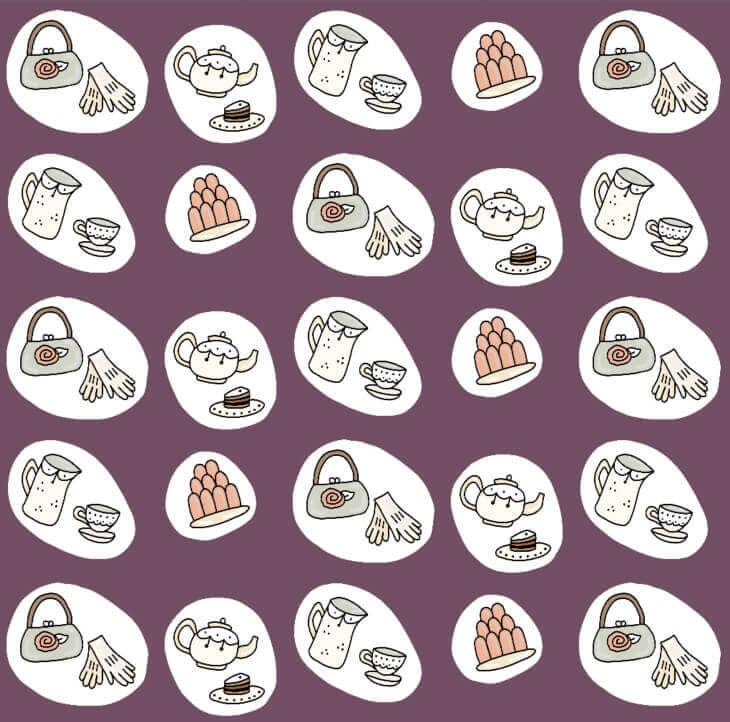
Edwardian Britain, vintage fabrics collection. By Manchester fashion designer Collette Costello.
My second collection was inspired by old postcards, I found in a stone terrace house. From the 1910s, 1920s, featuring old photographs and messages of love. Read the stories and see the fabrics below.
Invitation for the Lady An invitation for the lady for afternoon tea, such an honour. A fine spread to be had, Victoria sponge cake, jellies from moulds, lace dollies and blouses to match.
Remember Me Take this token of love, to remind you of me. Since seas divide, take a piece of me, so you will forget me not and remember me. A symbol of my deepest affection.
Dear Alice Dear Alice, I do wish I could take you by the hand in the good old fashioned way and walk along the lanes of our childhood. Where hedges were fragrant with wild roses, honeysuckle and the breeze came to us bringing the perfume of the clover fields and grass-meadows”
Day to Remember It was a day to remember, a day we thought would never come. Dancing in the street, bunting up high. We laughed, we cheered, we partied, long into the night.
Edwardian Lady, Day in the Life
Below is a story of a women living in Edwardian Britain. Based on true stories and facts. That inspired the fabrics above.
Penelope Berrycloth born of a family that once had wealth. Earned from the cotton mills in British towns. Now the family is middle class, they are comfortable at a time when others are not. Educated she attended a girls finishing school, funded by her Great Aunt. The daughter of a book-keeper. Manners, following the strict rules of etiquette. would give her chance to climb the class ladder again.
Dressed in a lilac satin skirt and waist dress, with lace triangular insert. Penelope is free from the constraints of the corset. Dressing in the style of french designer Paul Poiret. She has completed her look with long gloves and a large hat. Made in the famous hat making town, Stockport, Manchester. The hat is wide brimmed, a picture hat designed to frame the face. Decorated with silk bows, lace and feathers. Penelope is attending a fundraiser at Kendals. For the women’s right group “The Suffragettes”. A letter been received, addressed “an invitation for the lady”. An invite to afternoon tea with Manchester’s women of influence. Penelope needs to dress for the occasion, dress to impress.
Victoria sponge cake is served during high tea, at the ladies lunch. Edith Holden, the author of the “Country Diary of an Edwardian Lady”, is one of the guests. Her beautifully illustrated books featured nature, flowers from the British countryside. Books filled with romantic stories for the changing seasons in the British countryside. Where small villages are nestled, celebrating nature with a yearly well-dressing festival.
The ladies talk about politics, how war is looming, the 1st World War is in sight. Penelope holds her love token tightly in her hand. A romantic gift from her fiancee, they are divided by sea. Would she ever see him again?
The Edwardian history of Manchester, was researched at the institutes below. I designed this collection as part of studying for a Textiles MA at MMU. Read more about my studies, “Collette Costello School of Art MMU”.
The Edwardian era was an optimistic age. Following on from a Dickensian, Victorian Britain. People had more money, recovered now from World War 1. Glamour, music and fashion was everywhere.
It was the age of invention and excess. The world of the roaring 20s, as found in the novel “The Great Gatsby”. People wanted things bigger, better and more luxurious than ever before. The Titanic, the largest ship ever made, set sail and famously sank. Skyscrapers were being built everywhere in cities. Departments stores such as “Harrods” and “Selfridges”. Became symbols of sophistication, stocked with glamours, luxury goods.
Like during the Victorian era, in the Edwardian era. Printed fabrics were used mainly for interior textiles, as upholstery fabrics. 1920s fashion fabrics were usually woven or embroidered instead. In art deco and art nouveau styles. Decorated with repeat patterns, inspired by shapes in nature. The shape of a seashell, was a popular print design during this period. To reflect luxury, gold was a colour used a lot in 1920s printed patterns. Often printed onto a dark backgrounds to make the gold stand out more.
Sonja Delaunay was a famous fabric designer in the 1920s. Her textile prints were brightly coloured and hand-painted onto fabrics. She used repeat, geometric patterns in her printed. Sonja’s designs were inspired by cubism, abstract art styles. Taken from her own paintings. Fabric prints designed by Sonja Delaunay and other textile designer in the 1920s. Influenced textile design in the 1960s, 1970s. Art nouveau patterns can be found in 1960s psychedelics prints. Geometric, repeat pattern in mid-century 1970s fashion fabrics.
Traditional English Festivals, vintage fabrics collection. By Salford fashion designer Collette Costello.
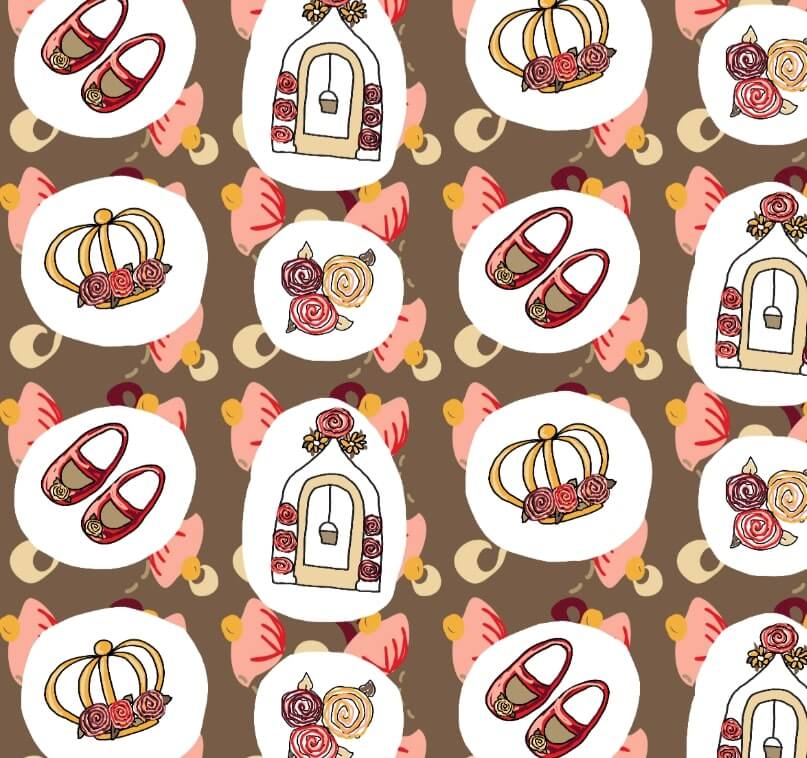
This fabric was inspired a photograph of my Nanna. Taken when she was crowned rose queen, in Salford during the 1920s. The Rose Queen festival, was one of the many traditional English festivals held yearly.
My Nanna’s Rose Queen Story
The Rose Queen Parade is a special tradition in Salford. It’s a day of fun and excitement, but it’s also a day of hope and starting fresh. The parade reminds us of the city’s history, its strength, and its bright future.
The Rose Queen Parade of Salford in the 1920s was a very important event filled with beauty, grandness, and community celebration. In this amazing event, my dear Nanna had the honour of being crowned the Rose Queen, making it a treasured memory for our family. Come with me as I take you back in time to the magical era when my Nanna walked the streets of Salford as the Rose Queen.
Rose Queen Parade
In the early 1920s, Salford’s Rose Queen Parade captured the town’s attention, but it meant even more to my Nanna. Chosen for her grace, elegance, and undeniable charm, she became the perfect example of beauty and composure. It was a big change that transformed her from a young girl into a respected and enchanting figure.
A Beautiful Show
Imagine the pretty streets of Salford decorated with colourful flags, flowing ribbons, and lots of roses. As the Rose Queen, my Nanna sat on a fancy float, surrounded by a splendid display of flowers. The sweet smell of the roses filled the air, creating a lovely atmosphere that added to the parade’s appeal.
People from the community eagerly gathered along the route, waiting for the procession with excitement. Friends, family, and local residents lined the streets, their faces full of joy and admiration. It was a proud moment for her family as they watched my Nanna’s happy smile and graceful waves, that captured the hearts of everyone there.
A Community Together
The Rose Queen Parade wasn’t just a show to watch; it was a chance for the community to come together and celebrate. The townsfolk, dressed in their best clothes, happily took part in the festivities. They cheered for my Nanna, gave her flowers, and threw confetti, showing their true affection and support.
All across town, houses turned into displays of admiration and pride. Streets were adorned with colourful decorations, reflecting the happy spirit of the occasion. The Rose Queen Parade brought the community together, creating strong connections and a feeling of belonging that lasted beyond that moment.
An Everlasting Memory
For my Nanna, being the Rose Queen wasn’t just a personal triumph, but also a cherished memory that she held close throughout her life. The experience shaped her character, teaching her about community, grace, and strength. It became a symbol of her connection to Salford and the enduring spirit of togetherness that defined the town.
The legacy of the Rose Queen Parade lives on, not only in the nostalgic stories passed down through generations, but also in the hearts of the Salford community. It reminds us of the beauty of tradition, the power of unity, and the lasting impact of a young girl who once wore a crown of roses.
The Rose Queen Parade Salford 1920s
The Rose Queen Parade of Salford in the 1920’s holds a special place in our family history, as my Nanna’s time as the Rose Queen became an unforgettable memory. The parade represented the beauty, unity, and community spirit of that time. As we remember my Nanna’s special moment, we are reminded of the significant impact of this magical event and how it created lasting connections between different generations.
The Rose Queen Parade is a long-standing tradition in Salford, England. It began in the early 1900s as a way to celebrate the city’s industrial heritage and its role in the production of roses. The parade quickly became a popular event, and it has continued to be held every year since then.
History of the Rose Queen Parade Salford
In the 1920s, the Rose Queen Parade was a major event in Salford’s social calendar. The parade would typically be held on a Saturday afternoon in June, and it would attract thousands of spectators from all over the city. The parade would feature floats, bands, and dancers, and it would culminate in the crowning of the Rose Queen.
The Rose Queen was a young girl who was chosen from a group of local girls. She would be crowned by the Mayor of Salford, and she would then lead the parade through the city streets. The Rose Queen would wear a beautiful dress made of roses, and she would be accompanied by a court of attendants.
The Rose Queen Parade was a time for Salfordians to come together and celebrate their city. It was a day of fun and excitement, and it was a chance for people to show their pride in their community. The parade continues to be held today, and it is still a popular event for people of all ages.
The Rose Queen Parade
The Rose Queen Parade is more than just a celebration of Salford’s heritage. It is also a symbol of hope and renewal. The parade is held every year in June, which is the month that marks the beginning of summer. This is a time of new beginnings, and the Rose Queen Parade is a way for Salfordians to look forward to the future.
The parade is also a reminder of the city’s resilience. Salford has faced many challenges over the years, but it has always come through them stronger. The Rose Queen Parade is a way for Salfordians to show their strength and their determination.












 Sewing Wellness | Collette Costello